
The Remnant Church and Believer's Baptism
The Church, Baptism, and the Lord's Supper • ~11 min read
The Remnant Church and Believer's Baptism
Foundations of Faith: 28 Core Adventist Doctrines for Youth — Lesson 14
What does it mean to truly belong to God's people? And when you decide to follow Jesus, what does that first public step look like? In this lesson we explore two powerful, connected truths: God has a visible, covenant community in the last days — the remnant church — and He calls every believer to enter that community through the ancient, meaningful act of baptism by immersion. These are not dry doctrines. They are living invitations to identity, belonging, and new life in Christ.
Part One: The Remnant Church — God's End-Time People
What Is a "Remnant"?
Throughout Scripture, God has always preserved a faithful group of people even when the majority turned away. The Hebrew concept of the "remnant" describes those who remain loyal to God when others drift into compromise or outright rebellion. Think of Noah's family surviving the flood, or the seven thousand in Israel who had not bowed to Baal (1 Kings 19:18). God never leaves Himself without a witness.
In the book of Revelation, this idea reaches its climax. After centuries of spiritual conflict, persecution, and apostasy, God's Word describes a final, identifiable community of believers who hold fast to His truth at the very end of time.
The Dragon Makes War on the Remnant
"And the dragon was wroth with the woman, and went to make war with the remnant of her seed, which keep the commandments of God, and have the testimony of Jesus Christ."
— Revelation 12:17 (KJV)
In this verse, the "woman" represents God's faithful church across history. The "dragon" — Satan — has been trying to destroy her throughout the ages. But at the end, his fury is directed at a specific group: the remnant of her seed. Notice the two defining marks of this remnant:
- They keep the commandments of God. This is not a vague spiritual niceness — it points to the full Decalogue, the Ten Commandments, including the seventh-day Sabbath (Saturday), which the majority of the Christian world has exchanged for Sunday worship. The remnant holds fast to God's perpetual moral law.
- They have the testimony of Jesus Christ. Revelation 19:10 clarifies this: "the testimony of Jesus is the spirit of prophecy." This means the remnant church is marked by the prophetic gift — God still speaks through the gift of prophecy in His end-time community.
The Testimony of Jesus Is the Spirit of Prophecy
"And I fell at his feet to worship him. And he said unto me, See thou do it not: I am thy fellowservant, and of thy brethren that have the testimony of Jesus: worship God: for the testimony of Jesus is the spirit of prophecy."
— Revelation 19:10 (KJV)
The angel who delivers this message identifies himself as a fellow servant of those "that have the testimony of Jesus." The prophetic gift is not extinct. Joel 2:28-29 promised that in the last days God would pour out His Spirit and His people would prophesy. Paul confirmed in 1 Corinthians 12 that prophecy is among the spiritual gifts given to the church for its edification. The remnant church, therefore, is a Spirit-filled, prophecy-guided community.
Keeping the Commandments — Including the Sabbath
"Here is the patience of the saints: here are they that keep the commandments of God, and the faith of Jesus."
— Revelation 14:12 (KJV)
This verse appears at the climax of the three angels' messages — God's final warning to the world. The saints who endure are defined by two things: they keep God's commandments and they have the faith of Jesus. These are not opposites; they are companions. Obedience is the fruit of faith, never its substitute.
The commandments here include the fourth commandment — the seventh-day Sabbath. God did not abolish the moral law at the cross. Jesus said, "Think not that I am come to destroy the law, or the prophets: I am not come to destroy, but to fulfil" (Matthew 5:17, KJV). The Sabbath is the perpetual sign of the Creator-Redeemer relationship, pointing back to the six-day creation week of Genesis and forward to the eternal rest in God's new creation.
"Remember the sabbath day, to keep it holy. Six days shalt thou labour, and do all thy work: But the seventh day is the sabbath of the LORD thy God."
— Exodus 20:8-10 (KJV)
Babylon and the Call to Come Out
The remnant does not exist in a vacuum. Revelation 17–18 describes "Babylon the great" — a symbol of the end-time confederation of apostate religious systems that have mixed the wine of false doctrine with worldly power and led the nations astray. God issues an urgent appeal:
"And I heard another voice from heaven, saying, Come out of her, my people, that ye be not partakers of her sins, and that ye receive not of her plagues."
— Revelation 18:4 (KJV)
Notice: God still has His people within Babylon. This is a call of love, not condemnation. He is gathering His remnant from every nation, denomination, and background. The remnant church is not an exclusive club of the self-righteous; it is a refuge for truth-seekers who respond to the Spirit's call.
Part Two: Believer's Baptism — The New Testament Pattern
What Is Baptism?
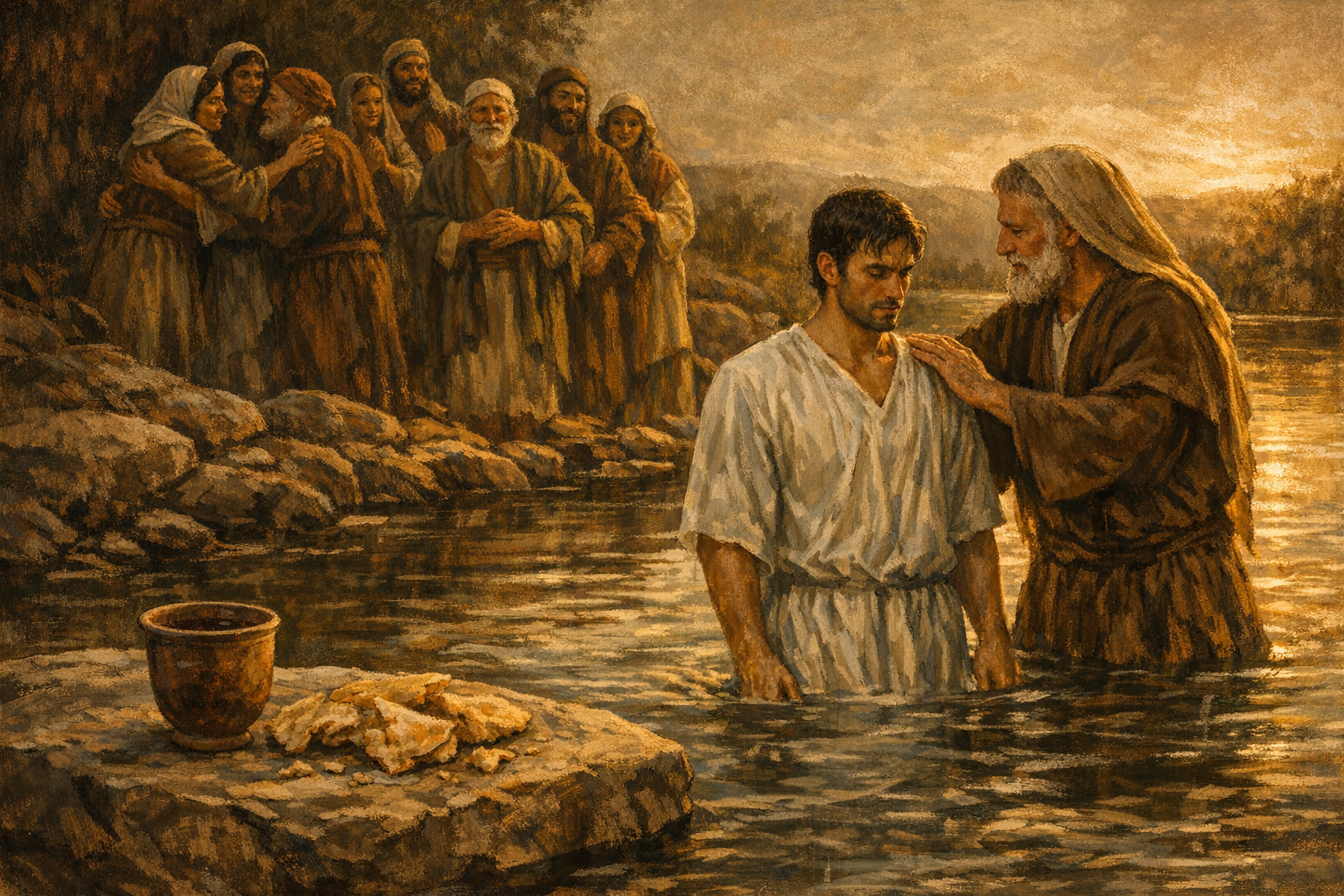
Baptism is the God-ordained rite of initiation into the body of Christ. It is not a mere tradition or cultural ceremony — it is a profound act of faith that publicly declares a person's death to the old life of sin, burial of the old self, and resurrection to new life in Jesus Christ. The New Testament is consistent and clear: baptism follows repentance and faith, and it is performed by full immersion in water.
Jesus Sets the Example
"And Jesus, when he was baptized, went up straightway out of the water: and, lo, the heavens were opened unto him, and he saw the Spirit of God descending like a dove, and lighting upon him."
— Matthew 3:16 (KJV)
Jesus Himself was baptized by immersion. The text says He "went up straightway out of the water" — which implies He had gone down into it. He had no sin to confess, yet He submitted to baptism to "fulfil all righteousness" (Matthew 3:15, KJV), setting the pattern for every believer to follow.
Baptism Requires Personal Faith First
"And he said unto them, Go ye into all the world, and preach the gospel to every creature. He that believeth and is baptized shall be saved; but he that believeth not shall be damned."
— Mark 16:15-16 (KJV)
The order in the Great Commission is unmistakable: believe first, then be baptized. This rules out infant baptism, which is performed before a child can exercise personal faith or repentance. The New Testament pattern is "believer's baptism" — a conscious, voluntary response to the gospel by a person who has personally trusted in Christ for salvation.
"Then Peter said unto them, Repent, and be baptized every one of you in the name of Jesus Christ for the remission of sins, and ye shall receive the gift of the Holy Ghost."
— Acts 2:38 (KJV)
On the Day of Pentecost, Peter's call to the crowd was: repent — then be baptized. Repentance and faith come first. Baptism is the public expression and seal of that inward turning to God.
Baptism as Death, Burial, and Resurrection
"Know ye not, that so many of us as were baptized into Jesus Christ were baptized into his death? Therefore we are buried with him by baptism into death: that like as Christ was raised up from the dead by the glory of the Father, even so we also should walk in newness of life."
— Romans 6:3-4 (KJV)
Paul's language here is rich and deliberate. Baptism by immersion perfectly enacts the gospel story: going under the water pictures death and burial of the sinful self; coming up out of the water pictures resurrection to new life in Christ. Sprinkling or pouring simply cannot carry this symbolic weight. The very act of immersion preaches the death, burial, and resurrection of Jesus.
This is also why baptism is tied to salvation by grace through faith. It is not a work that earns forgiveness — Christ's atoning sacrifice on the cross is the sole ground of our justification. Baptism is the moment of public commitment where the believer, already trusting in Christ, enacts that faith before God and the community.
Baptism and the New Birth
"Jesus answered, Verily, verily, I say unto thee, Except a man be born of water and of the Spirit, he cannot enter into the kingdom of God."
— John 3:5 (KJV)
Jesus connects the new birth with water and the Spirit. Baptism is the outward expression of the inward new birth. The Spirit regenerates the heart; baptism publicly declares that regeneration. Both are essential to a full New Testament conversion experience.
The Ethiopian Eunuch — A Model Conversion
"And as they went on their way, they came unto a certain water: and the eunuch said, See, here is water; what doth hinder me to be baptized? And Philip said, If thou believest with all thine heart, thou mayest. And he answered and said, I believe that Jesus Christ is the Son of God. And he commanded the chariot to stand still: and they went down both into the water, both Philip and the eunuch; and he baptized him."
— Acts 8:36-38 (KJV)
This account is a beautiful picture of the New Testament pattern. The Ethiopian had heard the gospel, believed with all his heart, and immediately sought baptism. Philip's one condition: genuine faith. They then went down into the water together — full immersion — and the man came up rejoicing. This is the model: hear the gospel, believe, confess faith, be immersed, walk in newness of life.
Baptism and Joining the Remnant Body
"For by one Spirit are we all baptized into one body, whether we be Jews or Gentiles, whether we be bond or free; and have been all made to drink into one Spirit."
— 1 Corinthians 12:13 (KJV)
Baptism is not just a private transaction between you and God. It is the moment you are formally incorporated into the body of Christ — the church. For those who have heard God's end-time call through the three angels' messages, baptism is the step by which they publicly join the remnant community, pledging to keep the commandments of God and hold the faith of Jesus together with their brothers and sisters.
Putting It Together: Remnant Identity and Baptismal Commitment
The remnant church and believer's baptism are deeply connected. The remnant is the community; baptism is the door. God is calling people out of Babylon — out of confusion and compromise — and into a community that stands on His Word, keeps His commandments (including the seventh-day Sabbath), holds the prophetic gift, and proclaims the everlasting gospel to the world. The way you enter that community is the same way every New Testament believer entered: through repentance, faith in Christ's atoning blood, and baptism by immersion.
Salvation is entirely by grace through faith in Jesus. We are justified — declared righteous — not by our baptism or our Sabbath-keeping, but by the blood of Christ alone. Baptism and obedience are the fruit of that salvation, the evidence that the Spirit has truly transformed the heart. As Paul wrote:
"For by grace are ye saved through faith; and that not of yourselves: it is the gift of God: Not of works, lest any man should boast. For we are his workmanship, created in Christ Jesus unto good works, which God hath before ordained that we should walk in them."
— Ephesians 2:8-10 (KJV)
Good works — including faithful obedience and the public act of baptism — flow from salvation, they do not produce it. This is the beautiful balance of the remnant: saved by grace, transformed by the Spirit, obedient from love.
Reflection Questions
- Revelation 12:17 identifies two marks of the remnant: keeping the commandments of God and having the testimony of Jesus. Why do you think Satan is specifically angry with this group? What does that tell you about the importance of these two characteristics?
- The New Testament pattern for baptism is: hear the gospel → believe → repent → be baptized by immersion. How does each step reflect what happens spiritually in a person's conversion? Why does the order matter?
- Romans 6:3-4 describes baptism as a burial and resurrection. How does the act of full immersion make the gospel visible in a way that sprinkling cannot? What does this teach us about the meaning of symbols in worship?
- Revelation 18:4 records God calling His people out of Babylon. What might "Babylon" represent in the world today, and what does it look like practically for a young person to "come out" and identify with God's remnant people?
- Some people say that keeping the commandments (including the Sabbath) is legalism. How would you use Ephesians 2:8-10 and Revelation 14:12 together to explain the relationship between grace, faith, and obedience to a friend who asked you this question?
Practical Application
This week, take one concrete step toward deeper commitment:
- If you have never been baptized by immersion as a believing follower of Jesus, speak with your pastor or youth leader this week about beginning baptismal preparation. The Ethiopian eunuch asked, "What doth hinder me?" — ask yourself the same question honestly.
- If you are already baptized, reflect on what your baptism meant when you made that commitment. Write a short paragraph in your journal describing what "walking in newness of life" (Romans 6:4, KJV) looks like for you right now — and identify one area where you want the Holy Spirit to continue His transforming work.
- Study the three angels' messages in Revelation 14:6-12 on your own this week. Identify every element of the remnant's identity in those verses and ask: "Does my life reflect these marks? Am I part of God's end-time witness to the world?"