
The Literal Second Coming and the Resurrection
The Second Coming, the Millennium, and Eternity • ~9 min read
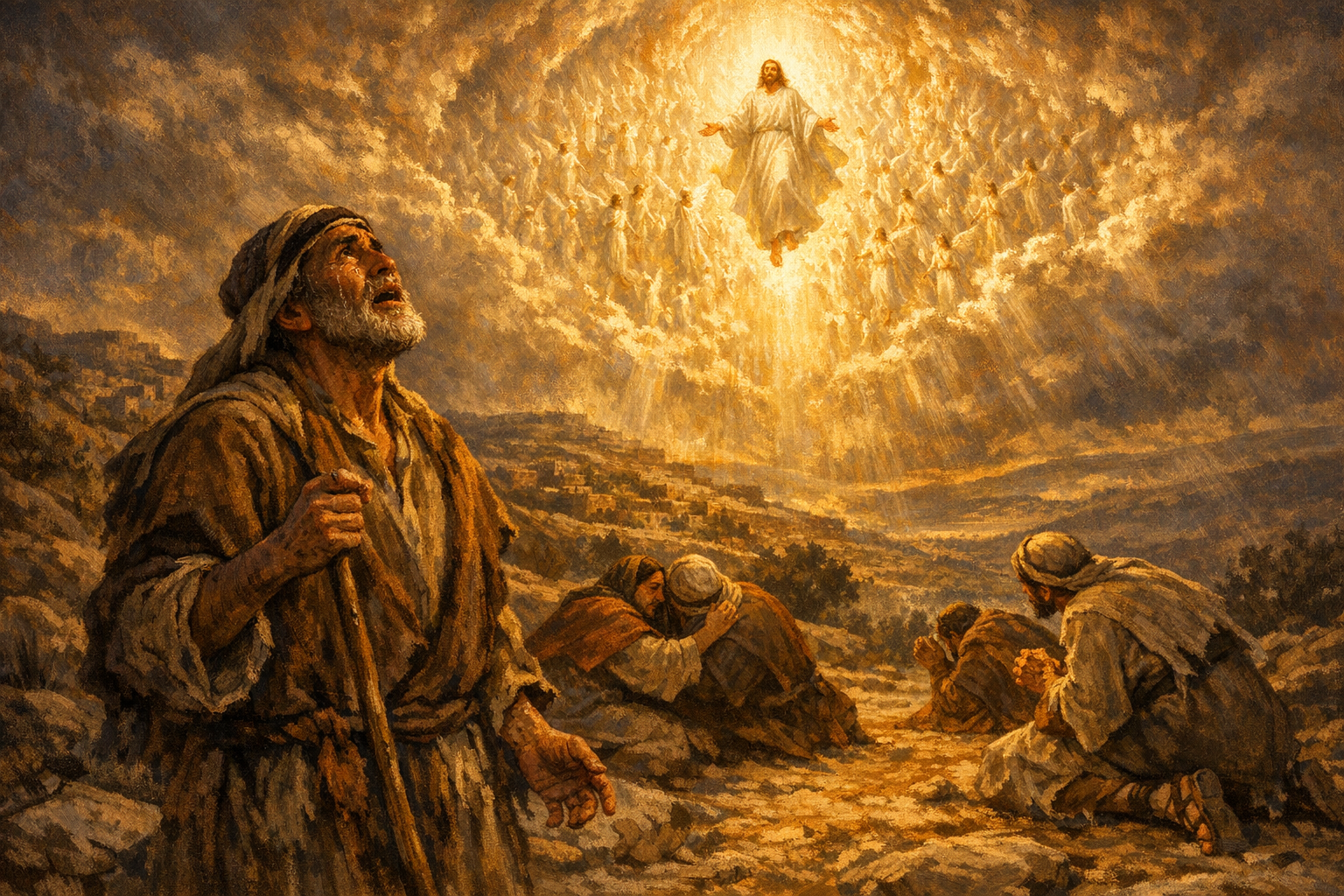
The Literal Second Coming and the Resurrection
Foundations of Faith: 28 Core Adventist Doctrines for Youth — Lesson 13
Have you ever waited for something so important that you could hardly think about anything else? Maybe it was a parent returning home after a long trip, or a letter that would change your future. The Christian faith is built on exactly that kind of expectation — a real, certain, glorious event that will end history as we know it: the literal, personal return of Jesus Christ. This is not a symbol, not a metaphor, and not something that already happened quietly in the past. It is the greatest event still to come, and the Bible describes it with breathtaking detail.
The Promise That Started It All
On the night before His crucifixion, Jesus gathered His disciples and made them a promise they would carry for the rest of their lives:
"Let not your heart be troubled: ye believe in God, believe also in me. In my Father's house are many mansions: if it were not so, I would have told you. I go to prepare a place for you. And if I go and prepare a place for you, I will come again, and receive you unto myself; that where I am, there ye may be also."
— John 14:1-3 (KJV)
Notice three things in this promise: Jesus says He will come again — not an angel, not a vision, not a spiritual feeling, but Jesus Himself. He says He will receive us — this is a physical, relational reunion. And He says it is so that we may be where He is — a real place prepared for real people. The Second Coming is personal, purposeful, and promised by Christ's own lips.
What Will It Look Like? A Literal, Visible, Audible Event
When Jesus ascended to heaven after His resurrection, the disciples stood staring up into the sky. Two angels appeared and corrected their confusion with one of the most direct prophecies in Scripture:
"Ye men of Galilee, why stand ye gazing up into heaven? this same Jesus, which is taken up from you into heaven, shall so come in like manner as ye have seen him go into heaven."
— Acts 1:11 (KJV)
"This same Jesus" — not a substitute, not a spiritual impression, but the identical risen Christ. "In like manner" — just as He ascended visibly, bodily, and in the presence of witnesses, so He will return visibly, bodily, and in the presence of all. The book of Revelation confirms this universal visibility:
"Behold, he cometh with clouds; and every eye shall see him, and they also which pierced him: and all kindreds of the earth shall wail because of him. Even so, Amen."
— Revelation 1:7 (KJV)
This rules out any "secret rapture" theory or the idea that the Second Coming is a quiet, invisible, spiritual event. Every eye will see Him. The apostle Paul adds the dimension of sound:
"For the Lord himself shall descend from heaven with a shout, with the voice of the archangel, and with the trump of God: and the dead in Christ shall rise first: Then we which are alive and remain shall be caught up together with them in the clouds, to meet the Lord in the air: and so shall we ever be with the Lord."
— 1 Thessalonians 4:16-17 (KJV)
A shout. The voice of the archangel. The trump of God. This is the most magnificent, unmistakable sound the universe will ever hear. And it triggers something equally astonishing — the resurrection.
The Resurrection: Death Is Not the End
To understand the resurrection, we first need to understand what the Bible teaches about death. Many people assume that when a person dies, their soul immediately goes to heaven or hell. But the Bible paints a very different picture. King Solomon, writing under inspiration, described death this way:
"For the living know that they shall die: but the dead know not any thing, neither have they any more a reward; for the memory of them is forgotten."
— Ecclesiastes 9:5 (KJV)
"Whatsoever thy hand findeth to do, do it with thy might; for there is no work, nor device, nor knowledge, nor wisdom, in the grave, whither thou goest."
— Ecclesiastes 9:10 (KJV)
The psalmist agrees:
"His breath goeth forth, he returneth to his earth; in that very day his thoughts perish."
— Psalm 146:4 (KJV)
Death in Scripture is described as a sleep — an unconscious rest, with no awareness of the passing of time. This is not a pagan idea of an immortal soul floating in a spirit world; it is the biblical teaching that the dead sleep until the resurrection. Jesus Himself used this language when His friend Lazarus died:
"These things said he: and after that he saith unto them, Our friend Lazarus sleepeth; but I go, that I may awake him out of sleep."
— John 11:11 (KJV)
The disciples misunderstood, thinking Jesus meant ordinary sleep. John clarifies: "Howbeit Jesus spake of his death" (John 11:13, KJV). Death is a sleep. The resurrection is the awakening. This is why the Second Coming is so urgent and so precious — it is the moment when all who have "slept" in Jesus are called back to life.
Two Resurrections, Two Destinies
The Bible describes two distinct resurrections, separated by one thousand years. Jesus Himself taught this:
"Marvel not at this: for the hour is coming, in the which all that are in the graves shall hear his voice, And shall come forth; they that have done good, unto the resurrection of life; and they that have done evil, unto the resurrection of damnation."
— John 5:28-29 (KJV)
The apostle Paul, writing to the Corinthians, gives us the most extended treatment of the resurrection in all of Scripture. He ties the believer's resurrection directly to Christ's own resurrection:
"But now is Christ risen from the dead, and become the firstfruits of them that slept. For since by man came death, by man came also the resurrection of the dead. For as in Adam all die, even so in Christ shall all be made alive. But every man in his own order: Christ the firstfruits; afterward they that are Christ's at his coming."
— 1 Corinthians 15:20-23 (KJV)
Christ's resurrection is the guarantee and the pattern for ours. He is the "firstfruits" — the first of a great harvest to come. Paul goes on to describe the transformation that will happen at that moment:
"Behold, I shew you a mystery; We shall not all sleep, but we shall all be changed, In a moment, in the twinkling of an eye, at the last trump: for the trumpet shall sound, and the dead shall be raised incorruptible, and we shall be changed. For this corruptible must put on incorruption, and this mortal must put on immortality."
— 1 Corinthians 15:51-53 (KJV)
Notice: immortality is something we put on at the resurrection — it is not something we already possess. This is a crucial distinction. The Bible does not teach the pagan concept of an inherently immortal soul. Immortality is the gift of God, received at the resurrection when Christ returns. The righteous dead do not go immediately to a conscious heaven at death; they sleep until this glorious moment.
The Timing: Premillennial and Personal
The first resurrection — "the resurrection of life" — happens at the Second Coming, before the millennium described in Revelation 20. The righteous dead are raised, the living righteous are transformed, and together they are caught up to meet the Lord. The wicked who are alive at that time are destroyed by the brightness of His coming (2 Thessalonians 2:8, KJV). The earth lies desolate for one thousand years while the redeemed reign with Christ in heaven. At the end of the millennium, the wicked are raised in the second resurrection, face the final judgment, and are ultimately destroyed in the lake of fire — a complete and final end, not an eternal conscious torment. As Paul writes:
"For the wages of sin is death; but the gift of God is eternal life through Jesus Christ our Lord."
— Romans 6:23 (KJV)
The wages of sin is death — a real ending — not unending life in agony. God's justice is complete and merciful. Sin and sinners will be no more.
Be Ready: Signs and Watchfulness
Jesus warned His followers not to be caught off guard. He gave signs of His coming — wars, famines, earthquakes, the worldwide preaching of the gospel — and urged constant readiness:
"Therefore be ye also ready: for in such an hour as ye think not the Son of man cometh."
— Matthew 24:44 (KJV)
He also warned against false christs and deceptive signs that would precede His return:
"For there shall arise false Christs, and false prophets, and shall shew great signs and wonders; insomuch that, if it were possible, they shall deceive the very elect."
— Matthew 24:24 (KJV)
The antidote to deception is knowing what the real Second Coming looks like: visible to every eye, audible to every ear, unmistakable in its glory. No one will need to be told it happened. No one will wonder if they missed it.
The Hope That Changes How We Live
The Second Coming is not a doctrine to be stored away in a dusty corner of theology. Paul calls it "that blessed hope":
"Looking for that blessed hope, and the glorious appearing of the great God and our Saviour Jesus Christ; Who gave himself for us, that he might redeem us from all iniquity, and purify unto himself a peculiar people, zealous of good works."
— Titus 2:13-14 (KJV)
Notice the connection: the hope of His appearing is linked directly to His atoning sacrifice ("who gave himself for us") and to the sanctifying work of the Spirit that produces a people "zealous of good works." Our readiness for the Second Coming is not achieved by earning our salvation through effort, but by surrendering to the One who redeemed us and allowing His Spirit to transform us. Obedience is the fruit of a saved life, not the root of it. We do not work our way to readiness; we abide in Christ, who makes us ready.
John, who saw the vision of Revelation, closes the entire Bible with this exchange:
"He which testifieth these things saith, Surely I come quickly. Amen. Even so, come, Lord Jesus."
— Revelation 22:20 (KJV)
That is the heartbeat of every true believer: "Even so, come, Lord Jesus." Not fear, but longing. Not dread, but hope.
Reflection Questions
- Based on Acts 1:11 and Revelation 1:7, how would you explain to a friend why the Second Coming cannot be a secret or invisible event? What difference does this make practically?
- How does understanding death as an unconscious sleep (Ecclesiastes 9:5; John 11:11) change the way you think about losing a loved one who died in faith? How does it make the resurrection more meaningful?
- Paul says in 1 Corinthians 15:51-53 that immortality is something we "put on" at the resurrection, not something we already have. How does this differ from what many people believe, and why does it matter for how we understand salvation?
- Jesus warns in Matthew 24:24 that false signs and wonders will be so convincing they could "deceive the very elect." What habits of Bible study and prayer would help you recognize deception when it comes?
- Titus 2:13-14 connects "that blessed hope" to being "zealous of good works." In what specific ways should the expectation of Christ's return shape your choices, relationships, and priorities this week?
Practical Application
This week, choose one person in your life — a friend, a family member, a classmate — who may not know the hope of the Second Coming. Pray for them daily, and look for one natural opportunity to share what you have learned. You do not need to have all the answers. Simply share the promise of John 14:1-3 (KJV): Jesus said, "I will come again." That promise has been kept every time He has made a promise before. It will be kept again. Let that confidence overflow into the way you speak, the way you serve, and the way you wait — expectantly, joyfully, and faithfully.