
Grace, Faith, and the Atoning Sacrifice of Christ
The Human Condition: Sin, Salvation, and the Cross • ~9 min read
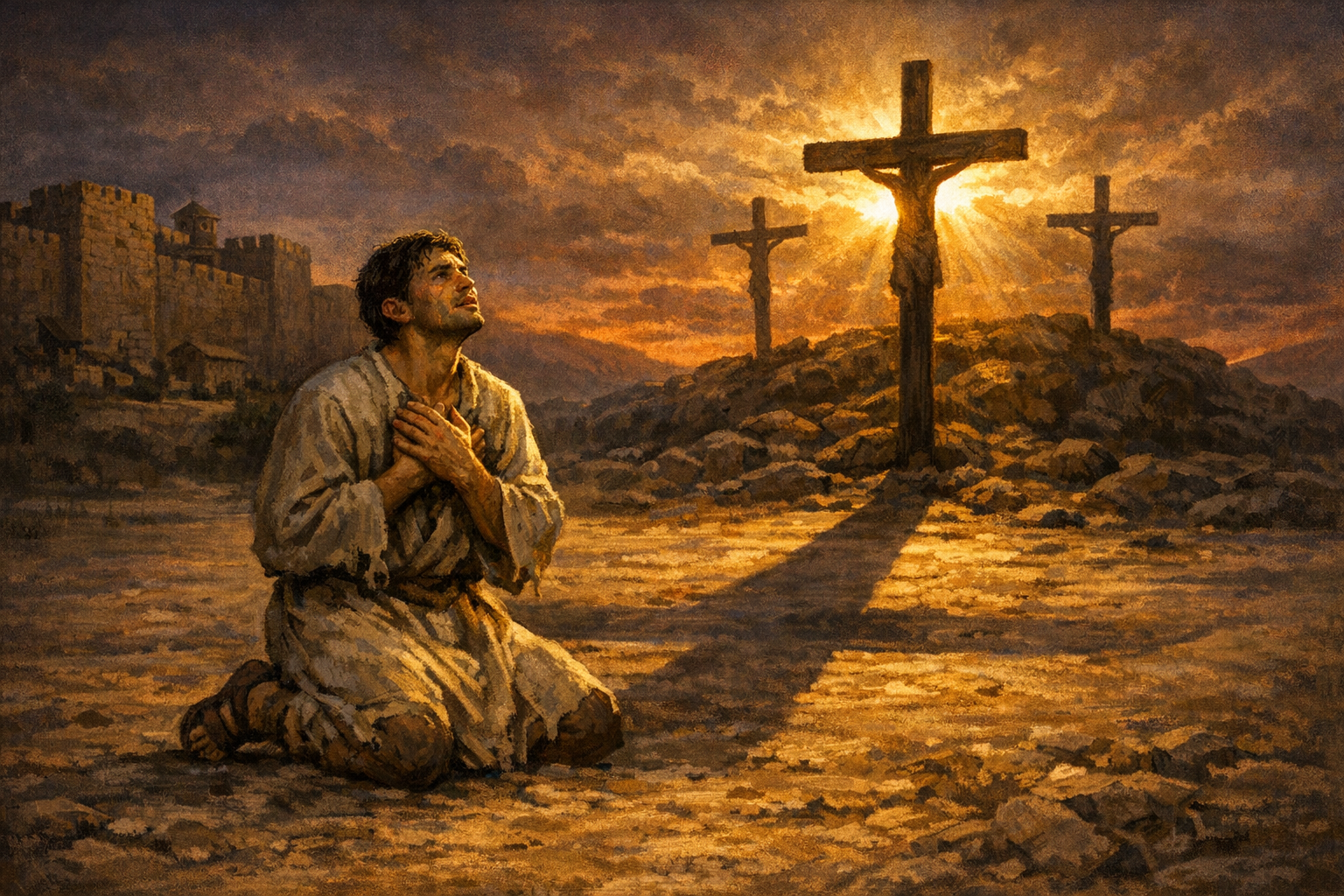
Grace, Faith, and the Atoning Sacrifice of Christ
Foundations of Faith: 28 Core Adventist Doctrines for Youth — Lesson on Salvation
Have you ever tried to earn your way into someone's good graces? Maybe you worked extra hard to impress a coach, a teacher, or a parent after making a mistake. It's exhausting — and deep down, you know it never quite feels like enough. The good news at the heart of the Bible is that God does not ask us to earn His love. He offers it freely, at the cost of His own Son. This lesson explores what the Bible calls grace — God's undeserved favor — and how faith connects us to the atoning sacrifice of Jesus Christ, the only remedy for human sin.
1. The Problem: Every Person Needs a Savior
Before we can appreciate the solution, we have to understand the problem. Scripture is unflinchingly honest about the human condition.
"For all have sinned, and come short of the glory of God." — Romans 3:23 (KJV)
"For the wages of sin is death; but the gift of God is eternal life through Jesus Christ our Lord." — Romans 6:23 (KJV)
Notice the contrast in Romans 6:23: sin earns wages — it produces a paycheck of death. But eternal life is not a wage; it is a gift. No one can work hard enough, be good enough, or be religious enough to deserve it. Sin has separated every human being from a holy God, and the penalty — death — is one we cannot pay on our own behalf and survive. We need a substitute. We need an atoning sacrifice.
2. The Solution: The Atoning Sacrifice of Jesus Christ
The word atonement carries the idea of covering, reconciling, and making things right between parties that have been separated. From the very beginning, God pointed His people toward the ultimate sacrifice that would accomplish what animal offerings could only foreshadow.
"For it is not possible that the blood of bulls and of goats should take away sins." — Hebrews 10:4 (KJV)
Every lamb slain in the Israelite sanctuary service was a living sermon — a preview of the Lamb of God. John the Baptist announced Him plainly:
"Behold the Lamb of God, which taketh away the sin of the world." — John 1:29 (KJV)
What those animal sacrifices could only point to, Jesus accomplished on the cross. He took our place, bearing the full penalty of sin so that we do not have to.
"But God commendeth his love toward us, in that, while we were yet sinners, Christ died for us. Much more then, being now justified by his blood, we shall be saved from wrath through him." — Romans 5:8–9 (KJV)
This is the heart of the gospel. God did not wait for us to clean ourselves up before He acted. While we were still rebels — still sinners — Christ died. His blood is the basis of our justification: the legal declaration that we stand righteous before God, not because of anything we have done, but because of what Christ has done for us.
"Who his own self bare our sins in his own body on the tree, that we, being dead to sins, should live unto righteousness: by whose stripes ye were healed." — 1 Peter 2:24 (KJV)
3. The Channel: Grace Through Faith
If Christ's sacrifice is the provision, then faith is the hand that receives it. Grace and faith belong together — you cannot understand one without the other.
"For by grace are ye saved through faith; and that not of yourselves: it is the gift of God: Not of works, lest any man should boast." — Ephesians 2:8–9 (KJV)
Let's unpack these two words carefully:
- Grace is God's unmerited favor — His decision to save us not because we deserve it, but because He loves us. Grace originates entirely in God's character, not in our performance.
- Faith is our trust in and surrender to Jesus Christ. It is not merely intellectual agreement that God exists; it is a living, active reliance on Christ as our only hope. Faith is itself described here as a gift — even our ability to respond to God comes from Him.
Notice what Paul says immediately after: "Not of works, lest any man should boast." This does not mean that works are unimportant. It means that works are never the foundation of our salvation. We are not saved by works; we are saved for works. Paul continues:
"For we are his workmanship, created in Christ Jesus unto good works, which God hath before ordained that we should walk in them." — Ephesians 2:10 (KJV)
Good works and obedience are the fruit of salvation, not the root of it. A tree does not become an apple tree by producing apples; it produces apples because it is an apple tree. Likewise, we do not become God's children by doing good things — we do good things because we have been born again as God's children.
4. Justification and Sanctification: Two Aspects of Salvation
The Bible presents salvation as having a beginning and an ongoing process. Understanding both protects us from two dangers: the pride of thinking we earned our standing with God, and the laziness of thinking that how we live after accepting Christ does not matter.
Justification is the instantaneous act by which God declares a repentant, believing sinner righteous on the basis of Christ's righteousness credited to their account. It is a completed legal verdict:
"Therefore being justified by faith, we have peace with God through our Lord Jesus Christ." — Romans 5:1 (KJV)
Sanctification is the ongoing work of the Holy Spirit transforming the believer's character to reflect Christ more fully. It is not a one-time event but a lifelong journey of growing in holiness:
"But we all, with open face beholding as in a glass the glory of the Lord, are changed into the same image from glory to glory, even as by the Spirit of the Lord." — 2 Corinthians 3:18 (KJV)
"Being confident of this very thing, that he which hath begun a good work in you will perform it until the day of Jesus Christ." — Philippians 1:6 (KJV)
God does not simply forgive us and leave us unchanged. He forgives us and transforms us. His goal is not just to get us into heaven, but to get heaven into us — to restore the image of God that sin has defaced.
It is also important to understand that while God's grace is lavish, it is not a blank check for continued rebellion. The writer of Hebrews warns those who would deliberately trample on the grace of Christ:
"For if we sin wilfully after that we have received the knowledge of the truth, there remaineth no more sacrifice for sins." — Hebrews 10:26 (KJV)
Salvation is not a one-time transaction that can never be affected by our choices. It is a living relationship. A person who persistently and willfully turns away from Christ walks away from the only Source of life. This is not meant to produce fear in the sincere believer, but to call us to take our relationship with God seriously.
5. Christ's Ongoing Ministry: Our High Priest in the Heavenly Sanctuary
The cross is not where Christ's saving work ended — it is where it was decisively accomplished. But the risen, ascended Christ continues to minister on our behalf in the heavenly sanctuary.
"Seeing then that we have a great high priest, that is passed into the heavens, Jesus the Son of God, let us hold fast our profession. For we have not an high priest which cannot be touched with the feeling of our infirmities; but was in all points tempted like as we are, yet without sin." — Hebrews 4:14–15 (KJV)
"Wherefore he is able also to save them to the uttermost that come unto God by him, seeing he ever liveth to make intercession for them." — Hebrews 7:25 (KJV)
Just as the Israelite high priest entered the Most Holy Place on the Day of Atonement to make final atonement for Israel, Christ entered the heavenly sanctuary — the true tabernacle — with His own blood. The earthly sanctuary was a model pointing to heavenly realities. Today, Jesus intercedes for each of us by name, applying the merits of His atoning sacrifice to every confessed sin. We are not left alone. We have an Advocate before the Father.
"My little children, these things write I unto you, that ye sin not. And if any man sin, we have an advocate with the Father, Jesus Christ the righteous: And he is the propitiation for our sins: and not for ours only, but also for the sins of the whole world." — 1 John 2:1–2 (KJV)
6. Responding to Grace: Faith That Works
True saving faith is never passive. James makes this clear in a passage that some find puzzling alongside Paul's emphasis on faith:
"Even so faith, if it hath not works, is dead, being alone." — James 2:17 (KJV)
Paul and James are not contradicting each other — they are answering different questions. Paul asks: What saves us? Answer: Grace through faith, not works. James asks: How do we know faith is real? Answer: Real faith produces visible fruit. A faith that makes no difference in how you live, love, or obey is not saving faith — it is merely intellectual agreement. Genuine faith reaches out and lays hold of Christ, and that grip changes everything about a person.
This is why obedience to God's commandments — including His perpetual moral law, the Ten Commandments — flows naturally from a heart transformed by grace. We do not keep the commandments to earn salvation; we keep them because we love the One who saved us, and because His Spirit is working in us to will and to do His good pleasure.
"If ye love me, keep my commandments." — John 14:15 (KJV)
"For this is the love of God, that we keep his commandments: and his commandments are not grievous." — 1 John 5:3 (KJV)
Reflection Questions
- Romans 5:8 says Christ died for us "while we were yet sinners." What does this tell you about the nature of God's grace? How does knowing this change the way you think about your own failures?
- Ephesians 2:8–9 says we are saved by grace through faith, "not of works." Yet Ephesians 2:10 says we are "created in Christ Jesus unto good works." How do you hold these two truths together without falling into either pride or laziness?
- Hebrews 4:14–15 describes Jesus as a High Priest who understands our weaknesses from personal experience. How does it affect your prayer life to know that the One interceding for you has faced the same temptations you face?
- James 2:17 says faith without works is dead. What are some practical "works" — changes in attitude, habits, or relationships — that a genuine faith in Christ's atoning sacrifice should produce in a young person's daily life?
- Hebrews 10:26 warns against willful, persistent sin after receiving the knowledge of truth. How do you distinguish between the normal struggles of a growing Christian and the dangerous pattern of deliberately rejecting God's grace?
Practical Application
This week, take five minutes each morning to do two things. First, receive: thank God specifically for one aspect of Christ's atoning sacrifice — His death, His resurrection, or His ongoing intercession for you in the heavenly sanctuary. Name it out loud or write it down. Second, respond: identify one area of your life where the Holy Spirit is calling you to grow — a habit to break, a relationship to repair, an act of service to offer — and ask God to work that change in you by His Spirit. Let grace be both your foundation and your fuel.