
One Body, Many Members: Unity in the Family of God
Living the Faith: Discipleship, Gifts, and the Christian Home • ~10 min read
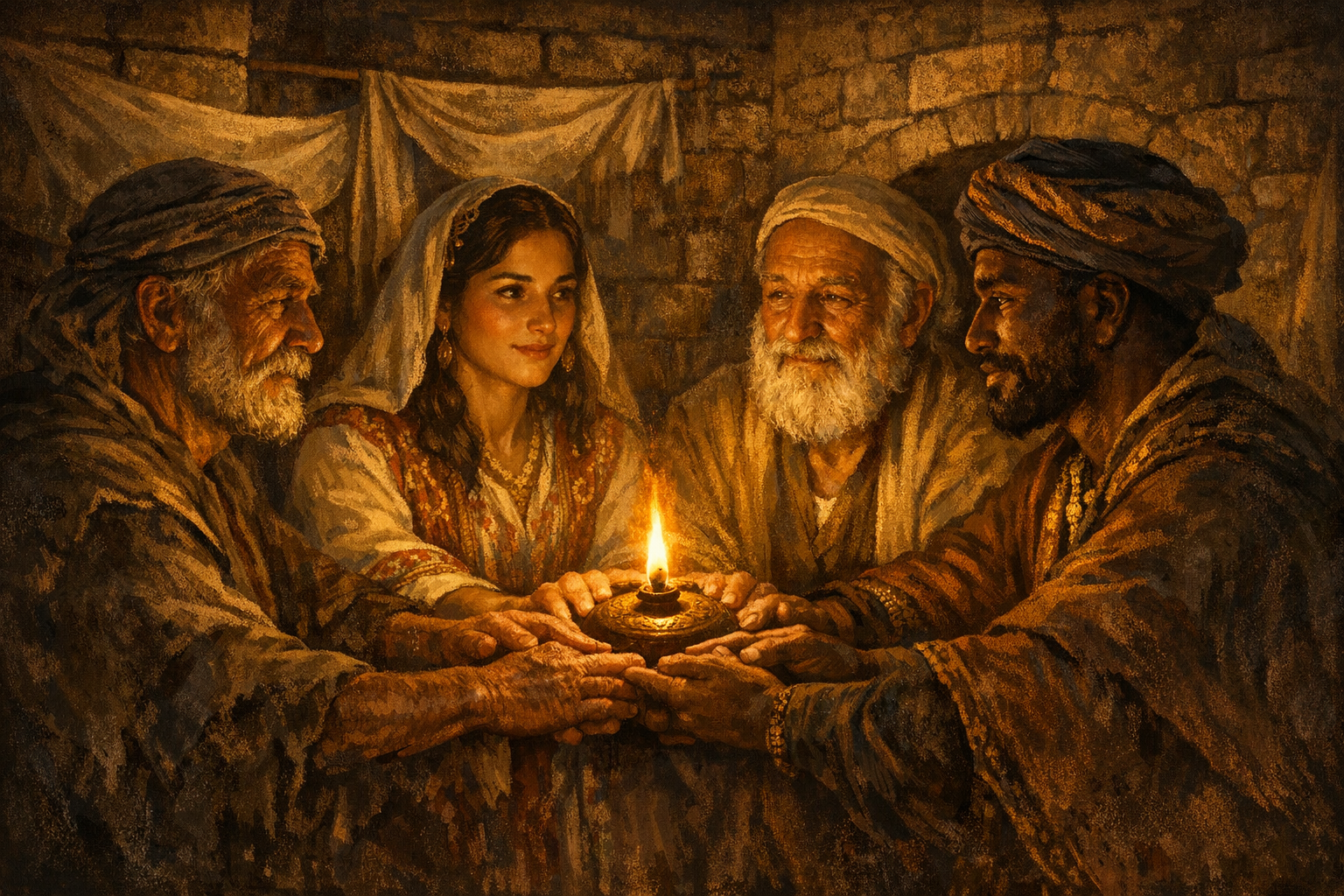
One Body, Many Members: Unity in the Family of God
Introduction
Have you ever watched a sports team where every player only cared about their own glory? Or a choir where each singer performed a different song at the same time? The result is chaos — not music, not victory. God's family, the church, works on a completely different principle. Scripture teaches that every believer is a unique, irreplaceable part of one living Body, and that the health of the whole depends on each member functioning in their God-given role. This lesson explores what it truly means to belong to the Body of Christ — not just as a membership number on a church roll, but as a living, breathing, Spirit-empowered participant in God's great mission.
What Is the Church?
The word "church" in the New Testament comes from the Greek ekklesia, meaning "called-out ones." The church is not a building; it is a people called out of the world and called together by Jesus Christ. Paul captures this beautifully in his letter to the Ephesians:
"And he is the head of the body, the church: who is the beginning, the firstborn from the dead; that in all things he might have the preeminence." — Colossians 1:18 (KJV)
Notice that Christ is described as the head of the body. This is not a ceremonial title — it means that every direction, every heartbeat of the church flows from Him. A body without its head is dead. Likewise, a congregation that loses its connection to Christ may retain the outward forms of religion but loses the life that makes it the church.
"And hath put all things under his feet, and gave him to be the head over all things to the church, Which is his body, the fulness of him that filleth all in all." — Ephesians 1:22-23 (KJV)
Paul's stunning claim here is that the church is described as "the fulness of him that filleth all in all." The church is meant to be the visible fullness of Christ in the world — His hands extended to the hurting, His voice speaking truth to the lost, His love poured out to the lonely. What an extraordinary calling!
One Body, Many Different Parts
The most extended treatment of the body metaphor in all of Scripture appears in 1 Corinthians 12. The church in Corinth was fractured by pride, competition, and the misuse of spiritual gifts. Paul's answer was not a management strategy — it was a theological vision of the Body of Christ.
"For as the body is one, and hath many members, and all the members of that one body, being many, are one body: so also is Christ. For by one Spirit are we all baptized into one body, whether we be Jews or Gentiles, whether we be bond or free; and have been all made to drink into one Spirit." — 1 Corinthians 12:12-13 (KJV)
This passage anchors Christian unity in something far deeper than cultural agreement or personal preference. Unity in the Body of Christ is a work of the Holy Spirit. It is the Spirit who baptizes every believer into the one Body. This is why New Testament baptism — believer's baptism by full immersion following repentance and faith — is such a profound declaration. Going under the water and rising again is a public testimony that you have died to your old self and been raised into the new community of Christ's Body (Romans 6:3-4).
"Now ye are the body of Christ, and members in particular." — 1 Corinthians 12:27 (KJV)
The phrase "members in particular" is significant. You are not a generic, interchangeable unit. You are a specific, particular member — placed exactly where God intended you to be. Paul goes on to illustrate this with the image of the human body:
"But now hath God set the members every one of them in the body, as it hath pleased him." — 1 Corinthians 12:18 (KJV)
God is the architect of the Body's diversity. He placed the eye where the eye belongs, the hand where the hand belongs — and He has placed you where you belong. This means your background, your personality, your experiences, and your spiritual gifts are not accidents. They are divine design.
The Danger of Comparison and Division
Paul anticipates two opposite errors that destroy the Body's unity. The first is the inferiority complex — the member who says, "Because I am not the hand, I am not of the body." The second is the superiority complex — the eye saying to the hand, "I have no need of thee." Both errors are rooted in a failure to trust God's design.
"And the eye cannot say unto the hand, I have no need of thee: nor again the head to the feet, I have no need of thee. Nay, much more those members of the body, which seem to be more feeble, are necessary." — 1 Corinthians 12:21-22 (KJV)
Notice Paul's counter-cultural claim: the members that "seem to be more feeble" — the ones the world overlooks — are necessary. God deliberately distributes gifts so that no one person has everything and every person has something. This creates a community of mutual dependence, which is exactly the kind of community that reflects the character of a triune God who exists in eternal, loving relationship.
Gifts Given for the Common Good
The Holy Spirit distributes spiritual gifts not for personal prestige but for the building up of the whole Body. Paul lists various gifts — wisdom, knowledge, faith, healing, miracles, prophecy, discernment of spirits, tongues, and interpretation of tongues (1 Corinthians 12:8-10). Among these gifts, the gift of prophecy holds a special place. Revelation 19:10 (KJV) declares that "the testimony of Jesus is the spirit of prophecy," and Scripture indicates that this gift would be active in God's end-time remnant people (Revelation 12:17). The gifts are not given to divide or to elevate individuals above others — they are given so that the whole Body can fulfil its mission.
"But the manifestation of the Spirit is given to every man to profit withal." — 1 Corinthians 12:7 (KJV)
The phrase "to profit withal" means for the common benefit. Every gift you have received from the Spirit is not primarily for your own enrichment — it is for the enrichment of the Body. Ask yourself: How am I using what God has given me to serve others?
Love: The Bond That Holds the Body Together
Immediately after his teaching on spiritual gifts in 1 Corinthians 12, Paul transitions to what he calls "a more excellent way" — the way of love. Chapter 13 is not a romantic poem; it is the operating manual for the Body of Christ.
"Though I speak with the tongues of men and of angels, and have not charity, I am become as sounding brass, or a tinkling cymbal." — 1 Corinthians 13:1 (KJV)
The word translated "charity" here is the Greek agape — the self-giving, unconditional love that finds its ultimate expression in the cross of Christ. Without this love, even the most spectacular spiritual gifts are empty noise. The gifts are the instruments; love is the music. Paul then calls the church in Ephesus — and every congregation since — to grow up into Christ:
"From whom the whole body fitly joined together and compacted by that which every joint supplieth, according to the effectual working in the measure of every part, maketh increase of the body unto the edifying of itself in love." — Ephesians 4:16 (KJV)
This verse is a masterpiece of organic imagery. The Body grows when every joint does its part. "Fitly joined together" suggests careful, intentional connection — not a loose collection of individuals who happen to attend the same building, but a community knit together by covenant love and shared mission. The goal of all this growth? "The edifying of itself in love." The church builds itself up through love — and that building project never ends until Christ returns.
Unity Without Uniformity
Biblical unity is not the same as sameness. God does not call us all to look alike, think alike, or come from the same background. The vision of the redeemed in Revelation 7:9 is breathtaking precisely because of its diversity:
"After this I beheld, and, lo, a great multitude, which no man could number, of all nations, and kindreds, and people, and tongues, stood before the throne, and before the Lamb, clothed with white robes, and palms in their hands." — Revelation 7:9 (KJV)
The white robes represent the righteousness of Christ — that is the unity. But the nations, kindreds, peoples, and tongues are still present — that is the beautiful diversity. Heaven is not a place where God erases our distinctives; it is a place where our distinctives are redeemed and offered back to God as a symphony of praise. The church on earth is called to be a foretaste of that heavenly reality right now.
The Foundation: Salvation and the Body
It is worth pausing to ask: How does one enter this Body? The answer is the gospel. We are not born into the Body of Christ by natural descent or church membership. We enter through repentance, faith in Christ's atoning sacrifice, and the new birth. Paul is clear that our standing before God is based entirely on grace through faith:
"For by grace are ye saved through faith; and that not of yourselves: it is the gift of God: Not of works, lest any man should boast." — Ephesians 2:8-9 (KJV)
Justification — being declared righteous before God — is Christ's gift to us, received by faith alone. But salvation does not end at justification. The same Spirit who baptizes us into the Body continues to work within us, transforming our character to reflect Christ more fully. This ongoing work is sanctification — not the root of our salvation, but the fruit of it. Obedience to God's commands, including His holy Sabbath and His moral law written in the Ten Commandments, flows naturally from a heart transformed by grace. We keep God's law not to earn His favour but because we love the One who saved us (John 14:15).
"For we are his workmanship, created in Christ Jesus unto good works, which God hath before ordained that we should walk in them." — Ephesians 2:10 (KJV)
Practical Application
Being part of the Body of Christ is not a passive identity — it is an active calling. This week, take three concrete steps toward living out your membership in the Body:
- Discover your gift. Pray and ask God to show you what spiritual gift or gifts He has given you. Talk to a trusted elder or pastor about how those gifts might be used in your local congregation.
- Serve one member. Identify someone in your church family who is struggling — perhaps isolated, grieving, or overwhelmed — and take one practical step to serve them this week. A meal, a phone call, a word of encouragement — small acts of love are the ligaments that hold the Body together.
- Pursue reconciliation. Is there tension or distance between you and another member of your church? Take the courageous step of reaching out. The unity of the Body is worth the discomfort of a hard conversation.
Reflection Questions
- Paul teaches in 1 Corinthians 12:18 that "God set the members every one of them in the body, as it hath pleased him." How does this truth change the way you see your own place in the church — especially if you have ever felt unimportant or overlooked?
- What is the difference between unity and uniformity? Why is it important that the church celebrate diversity while still being "one body"?
- In 1 Corinthians 13:1, Paul says that gifts exercised without love are "sounding brass" and "a tinkling cymbal." Can you think of a time when you or someone you observed used a gift or talent in a way that lacked love? What was the effect on the community?
- Ephesians 2:8-10 teaches that we are saved by grace through faith and created for good works. How does understanding salvation as a gift — not a wage — actually motivate you to serve others rather than making you passive?
- Looking at the vision of Revelation 7:9, where people of every nation and tongue worship together before the Lamb — what does this tell us about how our local church should treat people who are different from us in culture, background, or personality?