
The Lord's Supper, Stewardship, and the Body as God's Temple
The Church, Baptism, and the Lord's Supper • ~11 min read
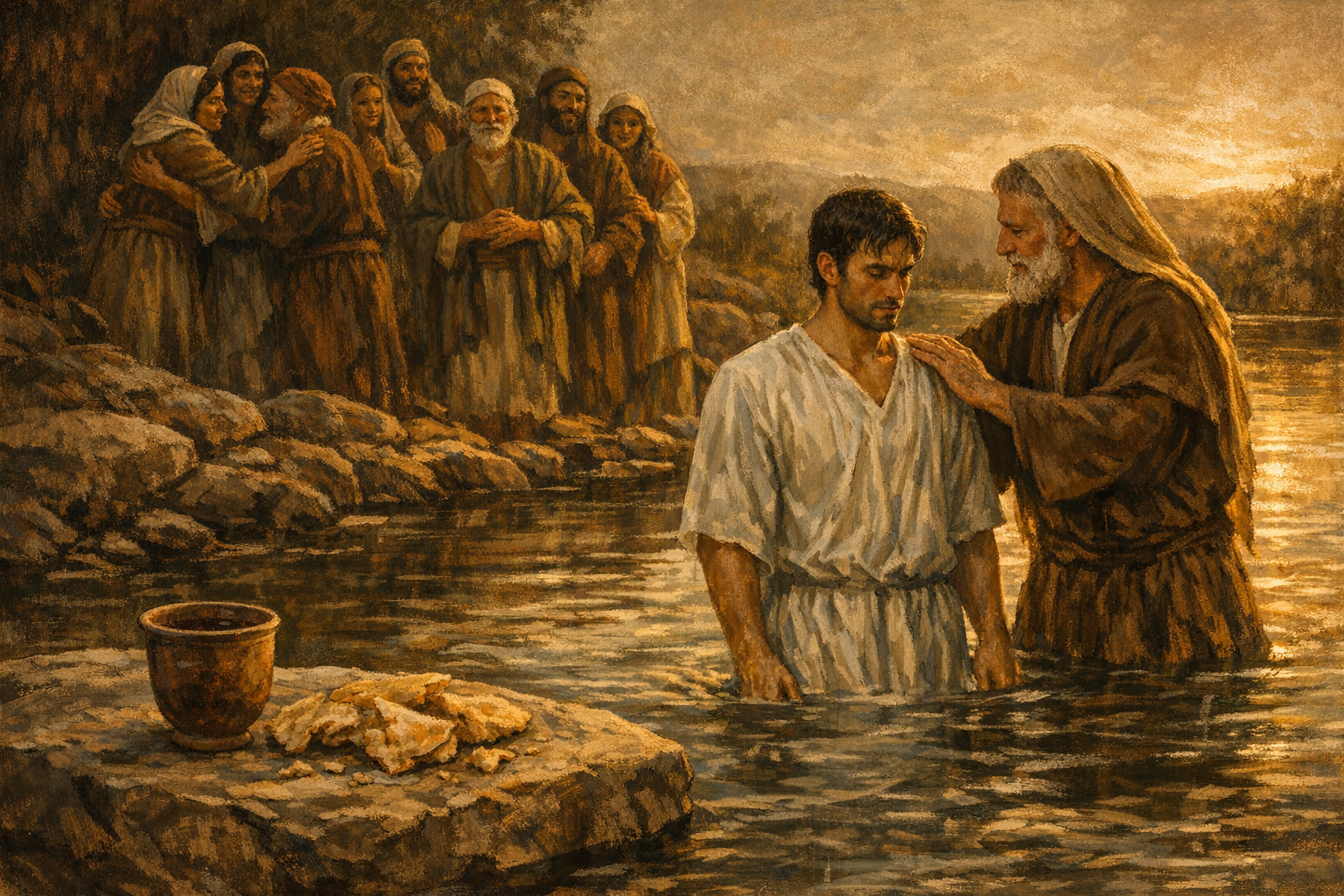
The Lord's Supper, Stewardship, and the Body as God's Temple
Part of: Foundations of Faith — 28 Core Adventist Doctrines for Youth
What does it mean to belong to God — not just in spirit, but in body, in habit, and in the way we sit down at a table together? This lesson brings three powerful biblical themes into one conversation: the sacred meal Jesus gave His church, the call to manage our bodies as temples of the Holy Spirit, and the principle of stewardship that runs through both. These are not separate ideas bolted together; they are one unified vision of what it looks like to live as a people who have been bought at an infinite price.
Part One: The Lord's Supper — Remembering, Proclaiming, Anticipating
The Night It Was Instituted
On the night before His crucifixion, Jesus gathered His disciples and gave them a meal that would become the most sacred ordinance of the Christian church. The apostle Paul, writing to the church at Corinth, preserves the earliest written account of what happened:
"For I have received of the Lord that which also I delivered unto you, That the Lord Jesus the same night in which he was betrayed took bread: And when he had given thanks, he brake it, and said, Take, eat: this is my body, which is broken for you: this do in remembrance of me. After the same manner also he took the cup, when he had supped, saying, This cup is the new testament in my blood: this do ye, as oft as ye drink it, in remembrance of me. For as often as ye eat this bread, and drink this cup, ye do shew the Lord's death till he come."
1 Corinthians 11:23–26 (KJV)
Notice that this ordinance has three dimensions at once. It looks backward — "in remembrance of me" — to the cross where Jesus' body was broken and His blood was shed for the forgiveness of sins. It looks outward — "ye do shew the Lord's death" — as a proclamation to the world and to the watching universe that Christ died for sinners. And it looks forward — "till he come" — as a living hope anchored in the literal, visible, personal return of Jesus Christ (see Acts 1:11; Revelation 1:7).
The Bread and the Cup
The bread represents the body of Christ, offered as a sacrifice for sin. The cup represents the new covenant sealed in His blood — the same covenant spoken of by Jeremiah (Jeremiah 31:31–34) and inaugurated at Calvary. Jesus said:
"And he took bread, and gave thanks, and brake it, and gave unto them, saying, This is my body which is given for you: this do in remembrance of me. Likewise also the cup after supper, saying, This cup is the new testament in my blood, which is shed for you."
Luke 22:19–20 (KJV)
The Adventist understanding is that the bread and cup are memorials — powerful, Spirit-filled symbols — not a physical re-sacrifice of Christ. Jesus ascended to heaven and now ministers as our High Priest in the heavenly sanctuary (Hebrews 8:1–2), interceding for us before the Father. The Lord's Supper points us to that ongoing ministry and to the completed work of the cross that is its foundation.
The Ordinance of Humility
Before the supper itself, Jesus knelt and washed His disciples' feet — an act so startling that Peter initially refused it. Jesus insisted:
"If I then, your Lord and Master, have washed your feet; ye also ought to wash one another's feet. For I have given you an example, that ye should do as I have done to you."
John 13:14–15 (KJV)
The foot-washing service is not a mere custom; it is an ordinance of humility that prepares our hearts to receive the Lord's Supper worthily. It strips away pride, restores broken relationships, and reminds us that greatness in the kingdom of God is measured by service, not status.
Examining Ourselves
Paul's warning to the Corinthians is sobering. Some were coming to the Lord's table carelessly — eating and drinking "unworthily" — and Paul says this brings serious spiritual consequences:
"Wherefore whosoever shall eat this bread, and drink this cup of the Lord, unworthily, shall be guilty of the body and blood of the Lord. But let a man examine himself, and so let him eat of that bread, and drink of that cup."
1 Corinthians 11:27–28 (KJV)
Self-examination before Communion is not about achieving sinless perfection — it is about coming with a sincere, repentant heart. We approach the table as forgiven sinners who trust entirely in Christ's atoning sacrifice, not in our own merit. Salvation is by grace through faith (Ephesians 2:8–9); the Lord's Supper celebrates and renews that grace.
Part Two: The Body as God's Temple — Health and Holiness
You Are Not Your Own
Immediately after addressing sexual immorality in 1 Corinthians 6, Paul makes a declaration that reaches far beyond that single issue. It is one of the most sweeping statements in all of Scripture about what it means to belong to God:
"What? know ye not that your body is the temple of the Holy Ghost which is in you, which ye have of God, and ye are not your own? For ye are bought with a price: therefore glorify God in your body, and in your spirit, which are God's."
1 Corinthians 6:19–20 (KJV)
The price was the blood of Jesus Christ. Because of that purchase, our bodies are not our private property to use however we please. They are sanctuaries — dwelling places of the Holy Spirit. This truth transforms every choice about what we eat, drink, wear, watch, and do with our physical strength. Holiness is not only a spiritual category; it is an embodied one.
Clean and Unclean: Enduring Health Principles
The dietary distinctions God established in Leviticus 11 and Deuteronomy 14 are not arbitrary religious rules. They reflect the Creator's design for the bodies He made. God said to Israel:
"For I am the LORD your God: ye shall therefore sanctify yourselves, and ye shall be holy; for I am holy: neither shall ye defile yourselves with any manner of creeping thing that creepeth upon the earth."
Leviticus 11:44 (KJV)
These principles were not part of the ceremonial law that pointed forward to Christ and was fulfilled at the cross. The ceremonial law — the sacrificial system, the feast days, the Levitical priesthood — was the shadow; Christ is the reality (Colossians 2:16–17; Hebrews 10:1). But the distinction between clean and unclean foods is rooted in creation order and in the stewardship of the body-as-temple. Adventist health teaching applies these principles not as a path to salvation, but as a joyful response to the God who designed us and redeemed us.
Sobriety and Self-Control
Scripture speaks plainly about alcohol and substances that impair the mind and body:
"Wine is a mocker, strong drink is raging: and whosoever is deceived thereby is not wise."
Proverbs 20:1 (KJV)
"Be sober, be vigilant; because your adversary the devil, as a roaring lion, walketh about, seeking whom he may devour."
1 Peter 5:8 (KJV)
Sobriety is not merely a health recommendation; it is a spiritual posture. A mind clouded by alcohol or other substances cannot fully discern the voice of the Spirit or stand firm against temptation. The call to sobriety is the call to keep the temple clear and the mind alert for God.
Sanctification: The Spirit's Ongoing Work
Caring for the body flows naturally from sanctification — the Holy Spirit's ongoing work of transforming us into the likeness of Christ. Paul writes:
"And the very God of peace sanctify you wholly; and I pray God your whole spirit and soul and body be preserved blameless unto the coming of our Lord Jesus Christ."
1 Thessalonians 5:23 (KJV)
Notice the word "wholly." Sanctification is not only about the inner life. God intends to consecrate the whole person — spirit, soul, and body — as a living offering. This is why Paul urges in Romans 12:1:
"I beseech you therefore, brethren, by the mercies of God, that ye present your bodies a living sacrifice, holy, acceptable unto God, which is your reasonable service."
Romans 12:1 (KJV)
Obedience in health, then, is not the root of our salvation — Christ's atoning sacrifice is the only foundation. But healthy living is a fruit of salvation, a tangible way we say "yes" to the Spirit's transforming work in our lives.
Part Three: Stewardship — Managing What Belongs to God
Everything Belongs to the Creator
Biblical stewardship begins with a foundational truth: we own nothing. God owns everything. The psalmist declares:
"The earth is the LORD'S, and the fulness thereof; the world, and they that dwell therein."
Psalm 24:1 (KJV)
We are managers, not owners. Our time, our talents, our financial resources, and our physical bodies are all entrusted to us by God to be used for His glory and the blessing of others. This reframes every decision: not "What do I want to do with my money?" but "What does God want done with His money that He has placed in my care?"
The Tithe: Acknowledging God's Ownership
God established the tithe — a tenth of our increase — as the primary way His people acknowledge His ownership and fund the work of the gospel. Through the prophet Malachi, God issued both a challenge and a promise:
"Bring ye all the tithes into the storehouse, that there may be meat in mine house, and prove me now herewith, saith the LORD of hosts, if I will not open you the windows of heaven, and pour you out a blessing, that there shall not be room enough to receive it."
Malachi 3:10 (KJV)
Jesus affirmed the principle of tithing (Matthew 23:23) while also calling His followers to a deeper generosity of heart. The tithe is a starting point, not a ceiling. Freewill offerings, given cheerfully and sacrificially, are the overflow of a heart that has grasped the grace of God.
"But this I say, He which soweth sparingly shall reap also sparingly; and he which soweth bountifully shall reap also bountifully. Every man according as he purposeth in his heart, so let him give; not grudgingly, or of necessity: for God loveth a cheerful giver."
2 Corinthians 9:6–7 (KJV)
Stewardship of the Body
The same stewardship principle that governs our finances governs our bodies. Because we are "bought with a price" (1 Corinthians 6:20, KJV), we are stewards of bodies that belong to God. Every choice — what we eat, how we rest, how we exercise, what we allow into our minds — is a stewardship decision. The body is not a burden to escape; it is a gift to be managed faithfully until Jesus comes.
Connecting the Three Themes
The Lord's Supper, body stewardship, and financial stewardship are not three unrelated topics. They are three expressions of the same reality: we belong entirely to God. The bread and cup remind us of the price paid for our redemption. The call to honor God in our bodies reminds us that the Spirit lives within us. The call to faithful giving reminds us that our resources are tools for the kingdom. Together, they paint a portrait of a life fully surrendered to Christ — justified by His grace, sanctified by His Spirit, and eager for His return.
Reflection Questions
- Paul says we should "examine" ourselves before participating in the Lord's Supper (1 Corinthians 11:28, KJV). What does genuine self-examination look like for a young person today? What attitudes or habits might need to be brought before God before coming to the table?
- Jesus washed His disciples' feet before instituting the Supper. Why do you think humility is a necessary preparation for worship? Is there a relationship in your life that needs the "foot-washing" of reconciliation or forgiveness?
- The Bible says your body is the temple of the Holy Spirit. How does that truth change the way you think about everyday choices — what you eat, what you watch, how you spend your energy? Where is the hardest area for you personally?
- Psalm 24:1 declares that the earth and everything in it belongs to God. If you truly believed that your money, time, and talents are on loan from God, what would change about how you use them this week?
- The Lord's Supper looks forward to Christ's return: "ye do shew the Lord's death till he come" (1 Corinthians 11:26, KJV). How does keeping the Second Coming in view shape the way you live right now — your health choices, your generosity, your relationships?
Practical Application
This Week: Live as a Steward
- Before the next Communion service: Set aside 10–15 minutes for honest self-examination. Write down one attitude or habit you want to surrender to God. Bring it to the foot-washing service and to the table.
- Body stewardship audit: Identify one specific health habit — a food choice, a sleep pattern, a substance to avoid — that you will commit to changing as an act of worship. Remember: this is not about earning salvation; it is about honoring the One who already saved you.
- Stewardship step: If you are not yet returning a faithful tithe, begin this Sabbath — even if the amount is small. Trust God's promise in Malachi 3:10 (KJV) and track what He does in your life over the next month.
- Proclaim the Lord's death: Share with one friend or family member what the Lord's Supper means to you and why you are looking forward to the day when you will drink it new with Jesus in His kingdom (Matthew 26:29, KJV).
Lord, we are not our own. We have been bought with a price. Teach us to glorify You in our bodies, in our giving, and at Your table — until You come. Amen.