
Growing in Christ: The Lifelong Walk of Discipleship
Living the Faith: Discipleship, Gifts, and the Christian Home • ~9 min read
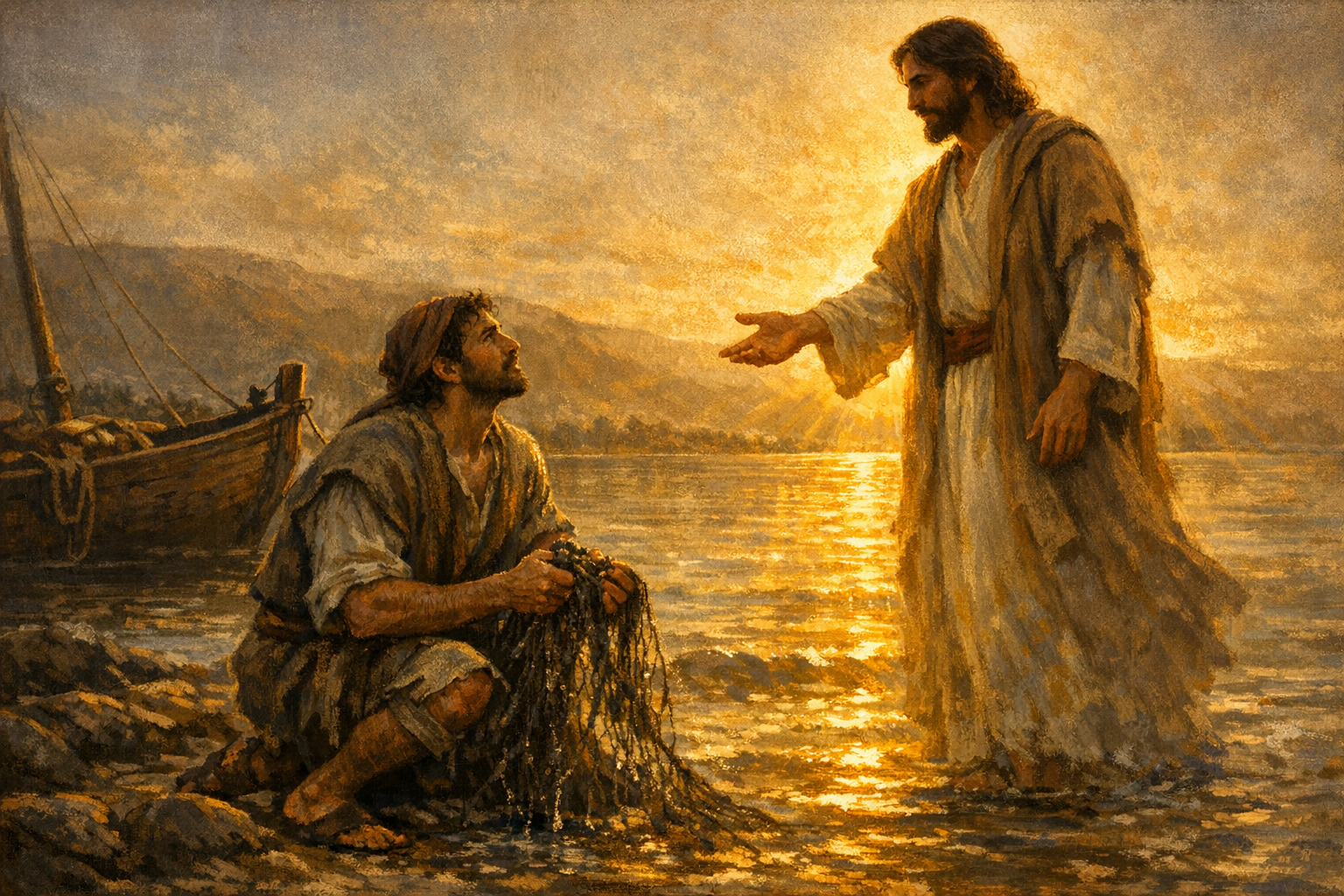
Growing in Christ: The Lifelong Walk of Discipleship
Introduction
Have you ever planted a seed and then watched — sometimes impatiently — as it slowly pushed through the soil, stretched toward the light, and eventually bore fruit? That image captures something essential about the Christian life. Salvation is not a single moment frozen in time; it is the beginning of a lifelong journey of growing closer to Jesus. The Bible calls this journey sanctification — the ongoing work of the Holy Spirit transforming us from the inside out. This lesson explores what it means to be a disciple of Christ: not just someone who made a decision once, but someone who walks with Him every single day.
As young people building the foundations of your faith, understanding the difference between justification (being declared righteous through Christ's atoning sacrifice) and sanctification (being made righteous by the Spirit's work in us) is crucial. Both are gifts of grace. Neither is earned. But together they paint the full picture of what God is doing in every believer's life.
Part 1: The Call to Follow — Discipleship Begins with Grace
Jesus did not call His disciples to a religious program. He called them to a relationship. His invitation was breathtakingly simple:
"And he said to them all, If any man will come after me, let him deny himself, and take up his cross daily, and follow me."
— Luke 9:23 (KJV)
Notice three movements in that verse: deny yourself, take up your cross daily, and follow me. The word "daily" is important. This is not a one-time act of surrender but a rhythm of life. Every morning we wake up and choose again to walk with Christ rather than with the world, the flesh, or the devil.
But where does the strength to make that choice come from? Not from willpower alone. The apostle Paul makes clear that salvation — from start to finish — is rooted in God's grace, received through faith:
"For by grace are ye saved through faith; and that not of yourselves: it is the gift of God: Not of works, lest any man should boast."
— Ephesians 2:8-9 (KJV)
This is the bedrock of discipleship. We do not follow Jesus in order to earn God's favor. We follow Jesus because God has already lavished His favor on us through Christ's atoning sacrifice at Calvary. Obedience is the fruit of salvation, not its root. A tree does not produce apples to become an apple tree — it produces apples because it already is one. In the same way, a disciple does not obey to become a child of God; a disciple obeys because they already are one, transformed by grace.
Part 2: Born Again — The Starting Point of Growth
Before a plant can grow, it must first be alive. Jesus told the religious leader Nicodemus something that shocked him: no one can even see the kingdom of God without being born again.
"Jesus answered and said unto him, Verily, verily, I say unto thee, Except a man be born again, he cannot see the kingdom of God."
— John 3:3 (KJV)
This new birth is not a physical event but a spiritual one — the Holy Spirit bringing new life to a heart that was spiritually dead in sin. This transformation is connected to repentance, faith, and baptism. The New Testament pattern for entering the community of believers is believer's baptism by full immersion — a public declaration that the old self has died with Christ and a new life has begun in Him:
"Therefore we are buried with him by baptism into death: that like as Christ was raised up from the dead by the glory of the Father, even so we also should walk in newness of life."
— Romans 6:4 (KJV)
Baptism is not what saves us — Christ's sacrifice saves us. But baptism is the God-ordained symbol of that salvation: going under the water pictures death to the old life; coming up pictures resurrection into the new. It is not a ritual performed on infants who cannot yet choose, but a conscious, faith-filled act of the person who has already repented and believed. This new birth is where the lifelong walk of discipleship begins.
Part 3: The Spirit's Work — Sanctification as Transformation
Once we are born again, the Holy Spirit does not leave us alone. He takes up residence within us and begins the patient, sometimes uncomfortable, always beautiful work of making us more like Jesus. This is sanctification.
"But we all, with open face beholding as in a glass the glory of the Lord, are changed into the same image from glory to glory, even as by the Spirit of the Lord."
— 2 Corinthians 3:18 (KJV)
The phrase "from glory to glory" tells us something important: this is a process. Growth in Christ is not instant. Just as no one goes to bed a seedling and wakes up a fully grown tree, spiritual maturity develops over time through the Spirit's ongoing work. The more we fix our eyes on Jesus — through prayer, Scripture, fellowship, and worship — the more we are transformed into His likeness.
Paul describes the evidence of the Spirit's work in a disciple's life:
"But the fruit of the Spirit is love, joy, peace, longsuffering, gentleness, goodness, faith, Meekness, temperance: against such there is no law."
— Galatians 5:22-23 (KJV)
These qualities are called fruit — not achievements. You cannot manufacture love or peace by gritting your teeth harder. They grow naturally in a life that remains connected to Christ, the true vine.
"I am the vine, ye are the branches: He that abideth in me, and I in him, the same bringeth forth much fruit: for without me ye can do nothing."
— John 15:5 (KJV)
The key word here is abideth — to remain, to stay connected. Discipleship is not a sprint; it is a sustained, daily abiding in Christ. When a branch is cut off from the vine, it withers. When we drift from Christ through neglect, sin, or rebellion, the fruit of the Spirit fades. This is why the New Testament repeatedly urges believers to persevere, to hold fast, and to continue in the faith — not because salvation is earned by perseverance, but because a living faith naturally continues to live and grow.
Part 4: The Law and the Disciple — Obedience as Love
Some people assume that because we are saved by grace and not by works, the commandments no longer matter. The Bible firmly corrects this misunderstanding. Jesus Himself said:
"If ye love me, keep my commandments."
— John 14:15 (KJV)
Obedience is not the ladder we climb to reach God; it is the natural response of a heart that loves God. The Ten Commandments are not a burden abolished at the cross — they are the perpetual moral law that reflects God's own character. The ceremonial laws of the Old Testament — the sacrificial system, the feast days, the temple rituals — were fulfilled in Christ, the Lamb of God. But the moral law, written by God's own finger in stone, stands forever as a mirror showing us what love for God and love for neighbor looks like in practice.
Among those ten commandments, the fourth — honoring the seventh-day Sabbath — holds a special place for the growing disciple. The Sabbath is not merely a rule; it is a weekly sign of the Creator-Redeemer relationship. God rested on the seventh day at creation, blessed it, and set it apart:
"And God blessed the seventh day, and sanctified it: because that in it he had rested from all his work which God created and made."
— Genesis 2:3 (KJV)
Every Saturday Sabbath is a living reminder that God made us, redeemed us, and is sanctifying us — that our identity and rest are found in Him, not in our own labor. For a disciple learning to trust God more fully, the Sabbath is a weekly school of faith: ceasing from work is a physical act of declaring that God is enough.
Part 5: Pressing Forward — The Disciple's Posture
Even the most mature believers are not yet finished products. The apostle Paul, near the end of his life, described his own discipleship with striking humility:
"Not as though I had already attained, either were already perfect: but I follow after, if that I may apprehend that for which also I am apprehended of Christ Jesus. Brethren, I count not myself to have apprehended: but this one thing I do, forgetting those things which are behind, and reaching forth unto those things which are before, I press toward the mark for the prize of the high calling of God in Christ Jesus."
— Philippians 3:12-14 (KJV)
Paul's posture is forward-leaning. He does not coast on past victories or wallow in past failures. He presses on. This is the spirit of discipleship: always moving toward Christ, always allowing the Spirit to do more in us, always keeping our eyes fixed on the finish line — the glorious, literal, visible return of Jesus Christ.
That hope is not vague or symbolic. Jesus promised He would come back personally and bodily, and the angels confirmed it at His ascension:
"Which also said, Ye men of Galilee, why stand ye gazing up into heaven? this same Jesus, which is taken up from you into heaven, shall so come in like manner as ye have seen him go into heaven."
— Acts 1:11 (KJV)
The Second Coming is the ultimate horizon of discipleship. Every step of growth we take now is preparation for that day — when Christ will raise the righteous dead and translate the living saints, and the long walk of faith will give way to face-to-face fellowship with our Lord forever. Until that day, we walk, we grow, we abide in the vine.
Reflection Questions
- Jesus said to take up your cross daily (Luke 9:23). What does "daily" discipleship look like practically in your life right now — at school, at home, online? What is one area where you sense God calling you to deny yourself more fully?
- Romans 6:4 connects baptism to both death and resurrection. If you have been baptized, how does the memory of that moment shape the way you think about who you are in Christ? If you have not yet been baptized, what questions or hesitations do you have?
- John 15:5 says that apart from Christ we "can do nothing." Where in your life do you most feel the temptation to try to grow spiritually in your own strength rather than through abiding in Christ? What habits help you stay connected to the vine?
- The fourth commandment sets aside the seventh-day Sabbath as a sign of the Creator-Redeemer relationship. How does keeping the Sabbath function as an act of trust and discipleship — not just a rule to follow — in your week?
- Paul said he presses toward the mark, "forgetting those things which are behind" (Philippians 3:13). Is there a past failure or sin that you find yourself dwelling on rather than releasing to God's grace? What does it look like to truly move forward in Christ?
Practical Application
This Week's Challenge — The Abiding Experiment: Choose one specific spiritual discipline to practice every day this week with the conscious intention of "abiding in the vine." It could be ten minutes of Scripture reading in the morning, a brief prayer journal before bed, or a moment of Sabbath-focused gratitude on Saturday. At the end of the week, reflect: Did you notice any difference in the "fruit" of your attitudes or actions? Share what you discovered with a friend, a parent, or your study group. Growth in Christ is rarely dramatic day-to-day — but over time, abiding always produces fruit.