
The Three Angels' Messages: A Present-Truth Call to Discipleship
Why the Gospel Is the Engine: The Message That Makes Disciples • ~12 min read
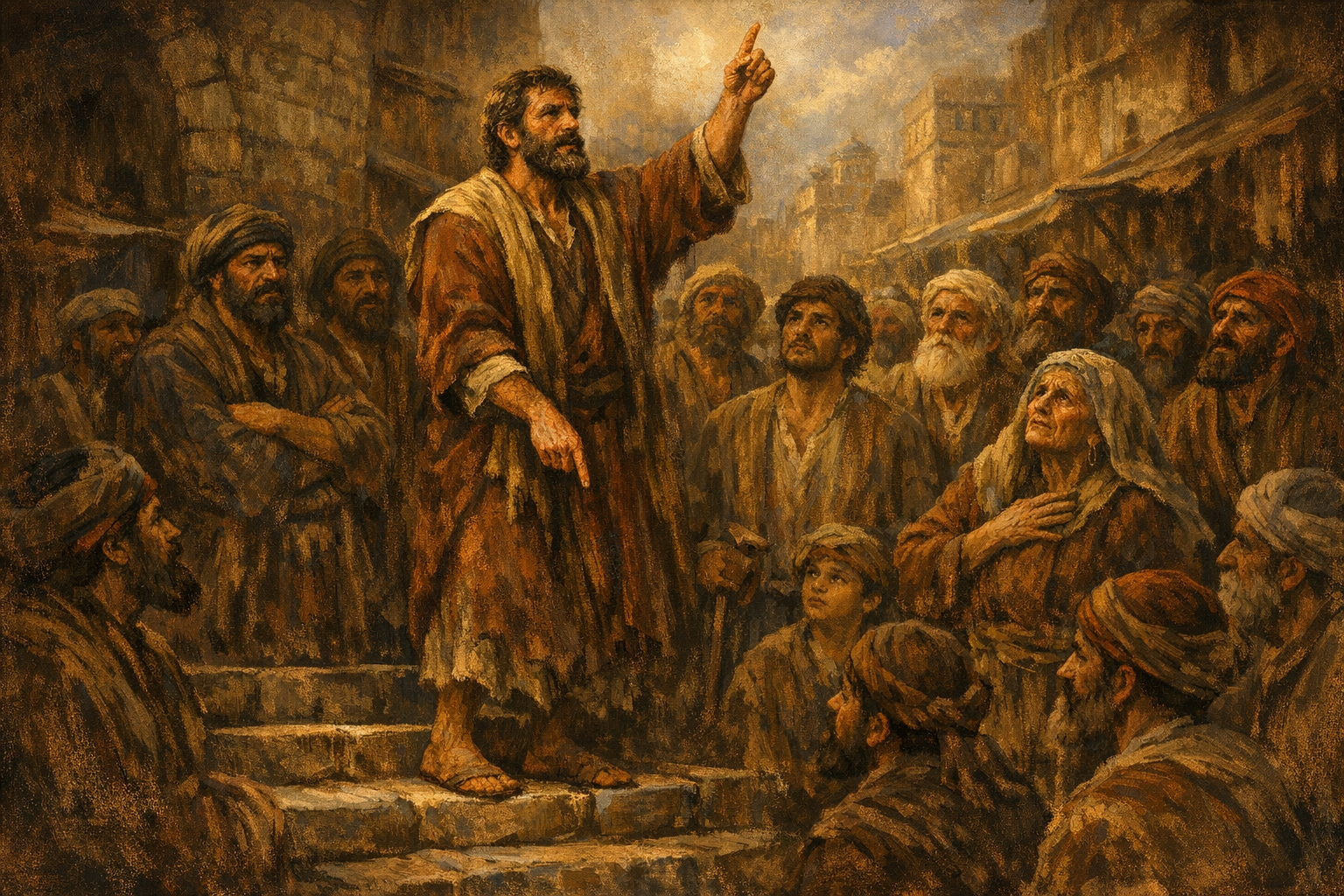
The Three Angels' Messages: A Present-Truth Awakening
Part of the Series: Awakening Spiritual Interest: Reaching Every Heart for God
Introduction
In every generation, God raises up a movement to carry a timely, urgent word to the world. The messages of the three angels in Revelation 14 are not relics of ancient prophecy — they are the very heartbeat of the gospel commission in the last days. They call a distracted, deceived, and dying world back to the Creator, warn against false worship, and announce the fall of a corrupt spiritual system. To understand these messages is to understand why the church exists in this hour and what it means to reach every heart for God with present truth.
The phrase "present truth" captures the idea that while all Scripture is true, certain truths carry particular urgency for a particular moment in history. The three angels' messages are precisely that — God's final, comprehensive appeal before the close of human probation and the return of Jesus Christ.
The Setting: A Remnant Church with a Global Commission
Before the three angels speak, the Revelation 14 passage situates us with the Lamb and His faithful people on Mount Zion. This is the same remnant described in Revelation 12, who "keep the commandments of God, and have the faith of Jesus" (Revelation 14:12, KJV). Their mission flows from who they are — a covenant people shaped by the law of God and the testimony of Jesus, sent to every corner of the earth.
"And I looked, and, lo, a Lamb stood on the mount Sion, and with him an hundred forty and four thousand, having his Father's name written in their foreheads."
— Revelation 14:1 (KJV)
These sealed ones stand in contrast to those who bear the mark of the beast (Revelation 13:16–17). The seal of God and the mark of the beast represent two rival loyalties — the Creator's claim upon His people versus the counterfeit authority of fallen religious-political power. The three angels' messages define both loyalties with unmistakable clarity.
The First Angel: Everlasting Gospel, Creator-God, and the Hour of Judgment
"And I saw another angel fly in the midst of heaven, having the everlasting gospel to preach unto them that dwell on the earth, and to every nation, and kindred, and tongue, and people, Saying with a loud voice, Fear God, and give glory to him; for the hour of his judgment is come: and worship him that made heaven, and earth, and the sea, and the fountains of waters."
— Revelation 14:6–7 (KJV)
Teaching: The Gospel at the Center
Notice that the very first thing the first angel carries is "the everlasting gospel." Every element of the three angels' messages — the call to fear God, the warning of judgment, the condemnation of Babylon — is grounded in the good news of Jesus Christ. The gospel is not merely a preamble; it is the foundation upon which all three messages stand. There is no present-truth awakening that bypasses Calvary.
The apostle Paul describes this same gospel as the power of God unto salvation:
"For I am not ashamed of the gospel of Christ: for it is the power of God unto salvation to every one that believeth; to the Jew first, and also to the Greek. For therein is the righteousness of God revealed from faith to faith: as it is written, The just shall live by faith."
— Romans 1:16–17 (KJV)
Salvation is by grace through faith in Christ's atoning sacrifice — His perfect life credited to us (justification by faith) and His Spirit transforming us from within (sanctification). Obedience to God's commandments is the fruit of this salvation, never its root. Any proclamation of the three angels' messages that leads people to earn standing before God has missed the very first word of the first angel: gospel.
Teaching: "Fear God and Give Glory to Him"
To "fear God" in biblical language is not terror but reverent awe — a wholehearted acknowledgment of His sovereignty, holiness, and rightful claim upon our lives. To "give glory to him" means to reflect His character in how we live, speak, and treat our bodies and one another. This includes the stewardship of our physical health, for the body is the temple of the Holy Spirit:
"What? know ye not that your body is the temple of the Holy Ghost which is in you, which ye have of God, and ye are not your own? For ye are bought with a price: therefore glorify God in your body, and in your spirit, which are God's."
— 1 Corinthians 6:19–20 (KJV)
Glorifying God in the body is a present-truth application. Abstaining from that which harms the body — alcohol, tobacco, unclean foods — is not legalism but a loving response to the God who redeemed us. The clean and unclean distinctions found in Leviticus 11 remain enduring principles of health and holiness, never annulled in the New Testament.
Teaching: "The Hour of His Judgment Is Come" — The Heavenly Sanctuary
The announcement that "the hour of his judgment is come" is not merely a warning of doom; it is a declaration that God's redemptive plan has entered its final phase. The prophetic clock of Daniel 8:14 — "Unto two thousand and three hundred days; then shall the sanctuary be cleansed" — points to 1844 as the beginning of Christ's high-priestly ministry in the Most Holy Place of the heavenly sanctuary, the pre-Advent investigative judgment.
"And he said unto me, Unto two thousand and three hundred days; then shall the sanctuary be cleansed."
— Daniel 8:14 (KJV)
The book of Hebrews confirms that Jesus entered the heavenly sanctuary as our great High Priest:
"Now of the things which we have spoken this is the sum: We have such an high priest, who is set on the right hand of the throne of the Majesty in the heavens; A minister of the sanctuary, and of the true tabernacle, which the Lord pitched, and not man."
— Hebrews 8:1–2 (KJV)
Christ's ongoing intercession in the heavenly sanctuary is the basis of our assurance. The judgment is not something to dread for those who are in Christ; it is the moment when God vindicates His people before the universe and prepares the way for Christ's return.
Teaching: "Worship Him That Made" — Creation and the Sabbath
The call to "worship him that made heaven, and earth, and the sea, and the fountains of waters" deliberately echoes the language of the fourth commandment:
"For in six days the LORD made heaven and earth, the sea, and all that in them is, and rested the seventh day: wherefore the LORD blessed the sabbath day, and hallowed it."
— Exodus 20:11 (KJV)
This is not coincidence — it is a divine signal. In the context of end-time worship, the seventh-day Sabbath stands as the perpetual sign of the Creator-Redeemer relationship. God affirmed a literal, recent, six-day creation week, and He sanctified the seventh day as the memorial of that creative work. The first angel's message is a global call to return to the worship of the Creator on the day He Himself set apart. The Sabbath is never replaced by Sunday observance in Scripture; it remains the seal of God's authority and the sign of His people's loyalty.
The Second Angel: The Fall of Babylon
"And there followed another angel, saying, Babylon is fallen, is fallen, that great city, because she made all nations drink of the wine of the wrath of her fornication."
— Revelation 14:8 (KJV)
Babylon in prophetic Scripture represents a system of false religion — a counterfeit of God's truth that intoxicates the nations with error. The repetition "is fallen, is fallen" signals the certainty and completeness of this collapse. The "wine" of Babylon's fornication is her false doctrines: the immortality of the soul, Sunday worship, a human priesthood standing between sinners and Christ, and the traditions of men elevated above the Word of God.
The biblical teaching on the state of the dead stands in direct contrast to one of Babylon's most intoxicating wines — the idea of an immortal soul that survives death. Scripture is clear:
"For the living know that they shall die: but the dead know not any thing, neither have they any more a reward; for the memory of them is forgotten."
— Ecclesiastes 9:5 (KJV)
"His breath goeth forth, he returneth to his earth; in that very day his thoughts perish."
— Psalm 146:4 (KJV)
Death is a sleep — an unconscious rest — until the resurrection. There is no immortal soul wandering between worlds, no purgatory, no communication with the dead. The dead await the voice of the Son of God at the resurrection:
"Marvel not at this: for the hour is coming, in the which all that are in the graves shall hear his voice, And shall come forth; they that have done good, unto the resurrection of life; and they that have done evil, unto the resurrection of damnation."
— John 5:28–29 (KJV)
Understanding the unconscious sleep of the dead is not a minor theological footnote — it protects God's people from spiritualistic deceptions that will intensify in the last days and unmasks one of Babylon's most cherished falsehoods.
The Third Angel: The Most Solemn Warning in Scripture
"And the third angel followed them, saying with a loud voice, If any man worship the beast and his image, and receive his mark in his forehead, or in his hand, The same shall drink of the wine of the wrath of God, which is poured out without mixture into the cup of his indignation; and he shall be tormented with fire and brimstone in the presence of the holy angels, and in the presence of the Lamb: And the smoke of their torment ascendeth up for ever and ever: and they have no rest day nor night, who worship the beast and his image, and whosoever receiveth the mark of his name."
— Revelation 14:9–11 (KJV)
This is the most severe warning in all of Scripture, and it is given in mercy — precisely because the stakes are eternal. The "torment" described here is the consequence of final unrepentant rebellion, and the phrase "for ever and ever" describes the permanence of the result (total destruction), not the duration of conscious suffering. Scripture consistently teaches that the wicked will be annihilated, not endlessly tormented:
"For, behold, the day cometh, that shall burn as an oven; and all the proud, yea, and all that do wickedly, shall be stubble: and the day that cometh shall burn them up, saith the LORD of hosts, that it shall leave them neither root nor branch."
— Malachi 4:1 (KJV)
The third angel's warning is the most urgent evangelistic appeal imaginable. It tells us that the choices people make about worship — whom they worship, on what day, under whose authority — have eternal consequences. This is why reaching every heart for God is not optional for the remnant church.
The Patient Saints: Law and Faith United
"Here is the patience of the saints: here are they that keep the commandments of God, and the faith of Jesus."
— Revelation 14:12 (KJV)
This verse is the portrait of the remnant people who have received and proclaimed the three angels' messages. They are defined by two inseparable realities: they keep God's commandments (including the seventh-day Sabbath of the fourth commandment — the Decalogue is the perpetual moral law, never abrogated at the cross) and they hold the faith of Jesus (saving, transforming trust in Christ's righteousness). Law and gospel are not enemies — they are the twin pillars of the remnant's identity.
Paul affirms the enduring nature of God's law:
"Do we then make void the law through faith? God forbid: yea, we establish the law."
— Romans 3:31 (KJV)
The Harvest and the Coming of the Son of Man
"And I looked, and behold a white cloud, and upon the cloud one sat like unto the Son of man, having on his head a golden crown, and in his hand a sharp sickle."
— Revelation 14:14 (KJV)
The three angels' messages culminate in the visible, personal, glorious return of Jesus Christ. His coming is literal and audible — not a secret rapture, not a spiritual impression, but the unmistakable appearing of the King of kings. The righteous dead will be raised and the living righteous transformed at that moment:
"For the Lord himself shall descend from heaven with a shout, with the voice of the archangel, and with the trump of God: and the dead in Christ shall rise first: Then we which are alive and remain shall be caught up together with them in the clouds, to meet the Lord in the air: and so shall we ever be with the Lord."
— 1 Thessalonians 4:16–17 (KJV)
The three angels' messages are not an end in themselves — they are preparation for the harvest. Every heart we reach with present truth is a heart being prepared to meet the returning Saviour.
Reaching Every Heart: The Evangelistic Imperative
The first angel flies "in the midst of heaven" with a message for "every nation, and kindred, and tongue, and people." The scope is universal. No community, culture, or class is outside the reach of this gospel. Jesus Himself declared:
"And this gospel of the kingdom shall be preached in all the world for a witness unto all nations; and then shall the end come."
— Matthew 24:14 (KJV)
The three angels' messages are the fullest, most complete expression of that gospel witness for our time. To awaken spiritual interest in every heart is to share not only the love of Christ but the urgent, specific truths that God has entrusted to His remnant people for this final hour.
Reflection Questions
- The first angel's message begins with "the everlasting gospel." How does keeping the gospel of Christ's atoning grace at the center of the three angels' messages change the way we present these truths to others?
- The call to "worship him that made heaven, and earth" directly echoes the fourth commandment. What practical steps can you take this week to make your Sabbath observance a more intentional act of worship to the Creator?
- How does understanding the biblical teaching on the unconscious sleep of the dead (rather than an immortal soul) protect believers from end-time deceptions? How might you gently share this truth with someone who has lost a loved one?
- Revelation 14:12 describes the saints as those who keep God's commandments and hold the faith of Jesus. Why is it important to hold both together, and what happens when a community emphasizes one while neglecting the other?
- The three angels' messages are addressed to "every nation, and kindred, and tongue, and people." Who in your immediate circle — family, workplace, neighbourhood — has not yet heard these present truths? What one step could you take to begin that conversation?
Practical Application
This week, choose one person in your life who does not yet know the present-truth message. Pray specifically for them each day, asking God to open their heart and to give you wisdom and gentleness in how you approach them. Begin, not with doctrine, but with the gospel — the love of Christ that gave everything for that person. From that foundation, let the conversation develop naturally toward the deeper truths of the Creator's claim upon our worship, the assurance of Christ's heavenly intercession, and the hope of His soon return. The three angels do not shout condemnation — they carry good news. Let your witness reflect that same spirit of urgent, compassionate love.
"And they that be wise shall shine as the brightness of the firmament; and they that turn many to righteousness as the stars for ever and ever."
— Daniel 12:3 (KJV)