
The Great Commission: Heaven's Discipleship Mandate
Why God Pursues: His Heart for Every Disciple • ~9 min read
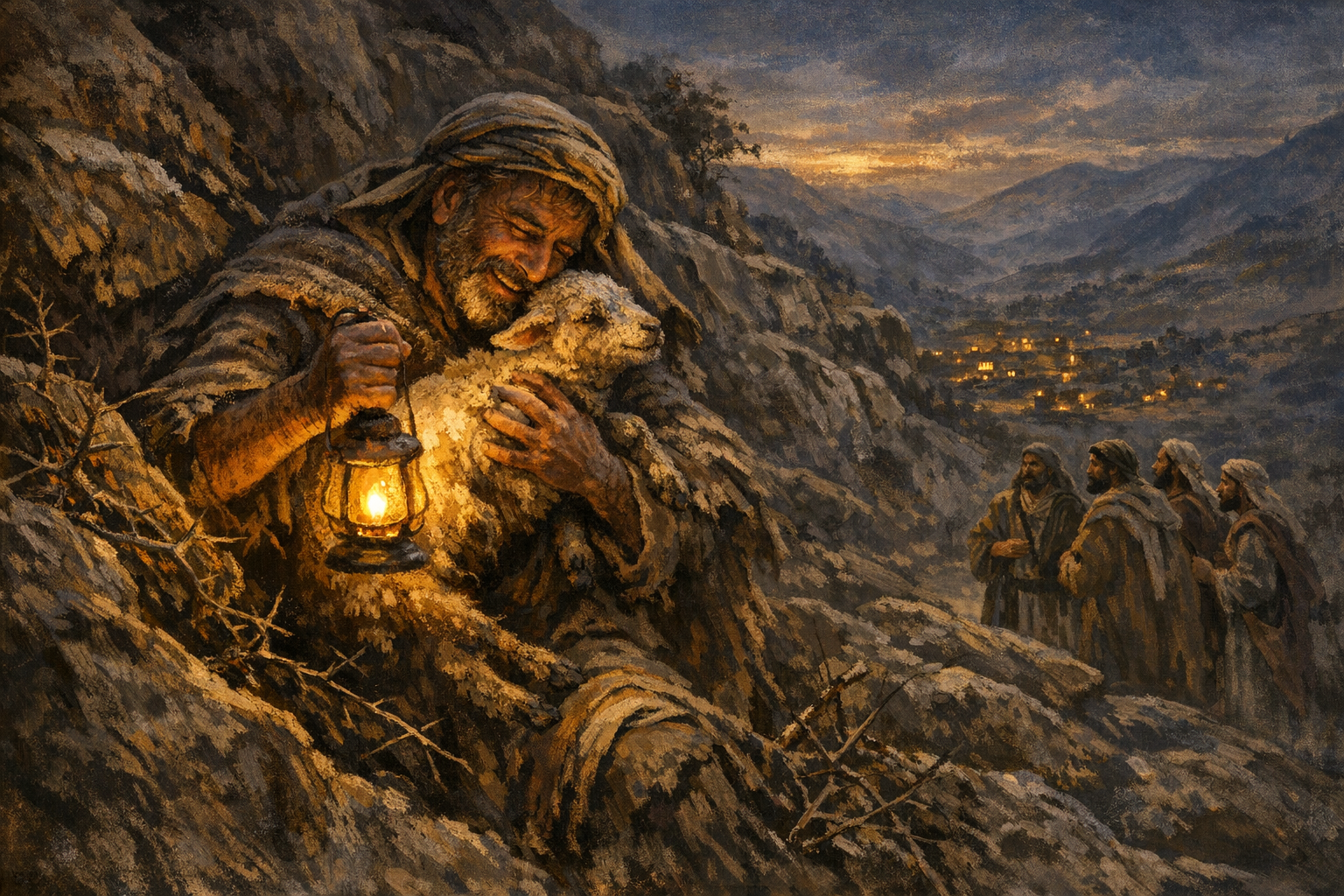
The Great Commission: Heaven's Standing Order
Part of the Series: Awakening Spiritual Interest: Reaching Every Heart for God
Introduction
Before the risen Lord ascended to take His place as our High Priest in the heavenly sanctuary, He left His followers with a mandate so sweeping in its scope that no generation since has had the right to lay it down. We call it the Great Commission, but it might better be understood as Heaven's standing order — a command that remains in full force until the last soul has been reached and Christ returns in glory. This lesson explores the biblical roots of that commission, the power that makes it possible, and the personal responsibility it places on every follower of Jesus today.
1. The Commission Stated: Every Nation, Every Creature
The fullest version of the Great Commission appears at the close of Matthew's Gospel, where the risen Christ speaks with the authority of One who has conquered death and ascended to rule over all things:
"And Jesus came and spake unto them, saying, All power is given unto me in heaven and in earth. Go ye therefore, and teach all nations, baptizing them in the name of the Father, and of the Son, and of the Holy Ghost: Teaching them to observe all things whatsoever I have commanded you: and, lo, I am with you alway, even unto the end of the world. Amen." — Matthew 28:18-20 (KJV)
Notice that the commission is grounded in Christ's authority — "All power is given unto me." The command to go does not rest on human ingenuity or organizational strength; it rests on the sovereign rule of the risen Saviour. Because He holds all authority, the disciples could go anywhere. Because He promised His presence, they could go without fear.
Mark's parallel account broadens the circle even further:
"And he said unto them, Go ye into all the world, and preach the gospel to every creature." — Mark 16:15 (KJV)
"Every creature" leaves no one out. The gospel is not a regional message for a favoured people; it is the universal remedy for the universal disease of sin. This global vision should shape the heart of every local congregation and every individual believer.
2. The Commission's Roots: A God Who Seeks
The Great Commission did not originate at the resurrection. It flows from the very character of a God who seeks the lost. Jesus described His own mission in these words:
"For the Son of man is come to seek and to save that which was lost." — Luke 19:10 (KJV)
This seeking heart was already visible in the Old Testament promise given through the prophet Ezekiel:
"For thus saith the Lord GOD; Behold, I, even I, will both search my sheep, and seek them out." — Ezekiel 34:11 (KJV)
The commission is therefore not a new idea imposed on reluctant disciples; it is an invitation to join the eternal mission of a seeking God. When we share the gospel, we are participating in the very work that brought the Son of God from the throne of heaven to the manger at Bethlehem.
3. The Power Behind the Commission: The Holy Spirit
The disciples were not sent out in their own strength. Before His ascension, Jesus explicitly told them to wait for divine empowerment:
"But ye shall receive power, after that the Holy Ghost is come upon you: and ye shall be witnesses unto me both in Jerusalem, and in all Judaea, and in Samaria, and unto the uttermost part of the earth." — Acts 1:8 (KJV)
The word translated "power" here is the Greek dunamis — dynamic, explosive enabling. The Holy Spirit does not merely assist our witness; He is the source of it. This is why Jesus instructed the disciples to tarry in Jerusalem before launching their mission. The order matters: first, receive the Spirit; then, go as witnesses.
The outpouring at Pentecost confirmed this pattern. When the Spirit fell, Peter — who had denied Christ three times just weeks earlier — stood before thousands and proclaimed the resurrection with such power that three thousand souls were baptised in a single day (Acts 2:41). The same Spirit who empowered the early church is available to the church today, and the same results are possible wherever His power is welcomed.
4. The Content of the Commission: Gospel and Discipleship
The Great Commission is sometimes reduced to evangelism alone — getting decisions and baptisms. But Matthew 28:20 makes clear that the commission includes "teaching them to observe all things whatsoever I have commanded you." The goal is not merely converts; it is disciples. There is a crucial difference.
Paul captures the full arc of the commission in his letter to the Colossians:
"Whom we preach, warning every man, and teaching every man in all wisdom; that we may present every man perfect in Christ Jesus." — Colossians 1:28 (KJV)
The gospel that is proclaimed must be the authentic gospel — salvation by grace through faith in Christ's atoning sacrifice, not by human merit. Paul is uncompromising on this point:
"For by grace are ye saved through faith; and that not of yourselves: it is the gift of God: Not of works, lest any man should boast." — Ephesians 2:8-9 (KJV)
Obedience to Christ's commands — including the keeping of the seventh-day Sabbath as the perpetual sign of the Creator-Redeemer covenant — flows from this salvation as its fruit, not as its root. The new disciple is not taught to obey in order to be saved, but is transformed by the Spirit to delight in God's law because they have been saved. This is the sanctifying work of the Spirit that continues throughout the believer's life.
Baptism by full immersion, as the New Testament pattern demonstrates, is the public declaration of this new life — a burial of the old self and a resurrection to walk in newness of life (Romans 6:3-4). It is the believer's first act of visible obedience following repentance and faith, and the doorway into the community of disciples.
5. The Urgency of the Commission: The End-Time Context
The Great Commission carries a particular urgency in the light of end-time prophecy. Revelation 14 presents three angels proclaiming a final, global message before Christ's return:
"And I saw another angel fly in the midst of heaven, having the everlasting gospel to preach unto them that dwell on the earth, and to every nation, and kindred, and tongue, and people, Saying with a loud voice, Fear God, and give glory to him; for the hour of his judgment is come: and worship him that made heaven, and earth, and the sea, and the fountains of waters." — Revelation 14:6-7 (KJV)
This is the Great Commission in its final, eschatological form. The "everlasting gospel" is to reach "every nation, and kindred, and tongue, and people" — an unmistakable echo of Matthew 28. The call to worship the Creator is a call back to the Sabbath, the weekly memorial of creation that God established at the beginning (Genesis 2:1-3) and sealed in the heart of the moral law (Exodus 20:8-11).
Jesus Himself connected the completion of the commission to His return:
"And this gospel of the kingdom shall be preached in all the world for a witness unto all nations; and then shall the end come." — Matthew 24:14 (KJV)
The church's mission is therefore not merely humanitarian or institutional; it is prophetic. Every soul reached with the gospel brings the world one step closer to the glorious, literal, visible return of Jesus Christ — the moment when the righteous dead will be raised and the living righteous will be translated to meet Him in the air (1 Thessalonians 4:16-17).
6. The Commission Is Personal: You Are a Witness
It is tempting to assign the Great Commission to pastors, evangelists, and missionaries, and to leave it there. But Scripture will not allow that escape. Peter addresses the entire church:
"But ye are a chosen generation, a royal priesthood, an holy nation, a peculiar people; that ye should shew forth the praises of him who hath called you out of darkness into his marvellous light." — 1 Peter 2:9 (KJV)
Every believer is part of a "royal priesthood" — a community of people whose very existence is meant to declare God's glory to the world. The commission is not fulfilled by proxy. It is fulfilled as each member of the body of Christ takes their place in the work of reaching hearts.
The apostle Paul described his own sense of personal obligation:
"For though I preach the gospel, I have nothing to glory of: for necessity is laid upon me; yea, woe is unto me, if I preach not the gospel!" — 1 Corinthians 9:16 (KJV)
This is not the language of reluctant duty but of Spirit-born compulsion. When the love of Christ truly fills a heart, witness becomes as natural as breathing.
Reflection Questions
- Jesus grounded the Great Commission in His own authority: "All power is given unto me in heaven and in earth" (Matthew 28:18, KJV). How does anchoring your witness in Christ's authority — rather than your own confidence or ability — change the way you approach sharing your faith?
- Acts 1:8 connects the reception of the Holy Spirit directly to the call to be witnesses. In what practical ways can you position yourself to be more fully empowered by the Spirit for the work of reaching others?
- The commission in Matthew 28:19-20 calls us to make disciples, not merely decisions — "teaching them to observe all things whatsoever I have commanded you." What does it look like in your congregation to move people from initial interest to mature, obedient discipleship?
- Revelation 14:6-7 presents the final proclamation of the "everlasting gospel" as an end-time commission. How does understanding your witness as part of a prophetic, end-time movement shape your sense of urgency and purpose?
- Peter describes the whole church as a "royal priesthood" called to "shew forth the praises of him who hath called you out of darkness" (1 Peter 2:9, KJV). Who in your personal sphere of influence — family, neighbour, colleague — has not yet heard the gospel from you, and what is one step you can take this week to change that?
Practical Application
This week, identify one person in your life who does not yet know Jesus. Commit to praying for them by name every day for the next seven days, asking the Holy Spirit to prepare their heart and to give you a natural, Spirit-led opportunity to share what Christ has done for you. You do not need a theological degree to say, "Let me tell you what God has done in my life." That personal testimony — your story of being called out of darkness into His marvellous light — is a witness no one can argue with, and it is the first thread of the gospel that may one day draw that soul to the Saviour.
Remember: the Great Commission is not a programme to be administered. It is a life to be lived — and the risen Christ has promised to be with you in it, "even unto the end of the world" (Matthew 28:20, KJV).