
Baptism and the New Life in Christ
Why Follow-Through Matters: From Decision to Discipleship • ~11 min read
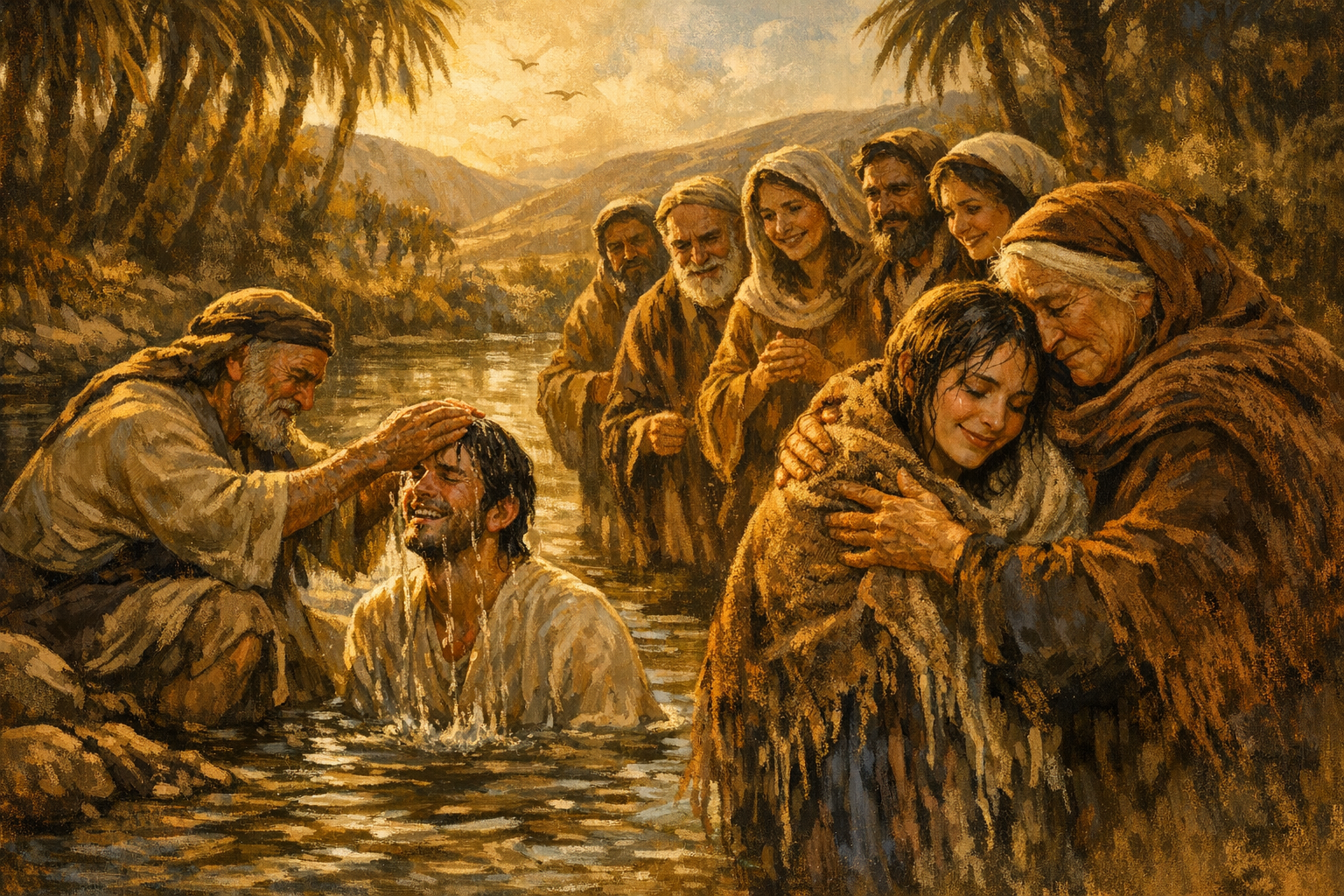
Baptism and the New Life in Christ
Part of the Series: Awakening Spiritual Interest: Reaching Every Heart for God
Introduction
Every genuine spiritual awakening reaches a moment of decision — a turning point where the stirring of the heart must be expressed in a public, visible act of commitment. That act, ordained by Christ Himself, is baptism. Far more than a religious ceremony or a cultural rite of passage, baptism is the divinely appointed threshold between the old life and the new. It is the outward declaration of an inward transformation already accomplished by grace through faith in Jesus Christ. As we seek to reach every heart for God, we must understand what baptism truly means, why it matters, and how it launches the believer into a sustained life of discipleship.
This lesson will walk through the biblical foundations of baptism — its mode, its meaning, its connection to the gospel of grace, and its call to ongoing holy living. Whether you are exploring baptism for the first time or seeking to deepen your understanding of your own commitment, the Word of God has rich and life-giving truth to offer you.
1. The Command and Commission of Christ
Baptism is not a human invention. It was commanded by the Lord Jesus Christ as the appointed gateway into discipleship. Before His ascension, Jesus gave His church what we call the Great Commission:
"Go ye therefore, and teach all nations, baptizing them in the name of the Father, and of the Son, and of the Holy Ghost: Teaching them to observe all things whatsoever I have commanded you: and, lo, I am with you alway, even unto the end of the world. Amen." — Matthew 28:19-20 (KJV)
Notice the sequence Christ establishes: teaching (making disciples) comes before baptizing. This is the New Testament pattern — a person first hears the gospel, understands it, believes it, and then is baptized as a public expression of that faith. This rules out infant baptism, which has no basis in Scripture. Infants cannot hear, understand, or believe the gospel. The New Testament pattern is consistently one of believer's baptism — a conscious, voluntary response of faith following genuine repentance and conversion.
Furthermore, the commission links baptism inseparably to ongoing discipleship: "Teaching them to observe all things whatsoever I have commanded you." Baptism is not the finish line; it is the starting line. It is the beginning of a life of learning and following Jesus.
2. The Mode of Baptism: Immersion as the New Testament Pattern
The word "baptize" comes from the Greek word baptizō, which means to dip, plunge, or immerse. The New Testament consistently portrays baptism as full immersion in water. When Jesus Himself was baptized by John in the Jordan River, the text says:
"And Jesus, when he was baptized, went up straightway out of the water: and, lo, the heavens were opened unto him, and he saw the Spirit of God descending like a dove, and lighting upon him." — Matthew 3:16 (KJV)
He "went up out of the water" — implying He had been down in it. The same pattern appears in the baptism of the Ethiopian eunuch by Philip:
"And he commanded the chariot to stand still: and they went down both into the water, both Philip and the eunuch; and he baptized him. And when they were come up out of the water, the Spirit of the Lord caught away Philip, that the eunuch saw him no more: and he went on his way rejoicing." — Acts 8:38-39 (KJV)
They went down into the water and came up out of the water. The mode of immersion is not merely a technical preference — as we will see in the next section, it carries profound theological meaning that sprinkling simply cannot convey.
3. The Meaning of Baptism: Death, Burial, and Resurrection
The Apostle Paul provides the most theologically rich explanation of what baptism symbolizes. It is nothing less than a re-enactment of the death, burial, and resurrection of Jesus Christ — and a declaration that the believer has been united with Him in all three:
"Know ye not, that so many of us as were baptized into Jesus Christ were baptized into his death? Therefore we are buried with him by baptism into death: that like as Christ was raised up from the dead by the glory of the Father, even so we also should walk in newness of life. For if we have been planted together in the likeness of his death, we shall be also in the likeness of his resurrection: Knowing this, that our old man is crucified with him, that the body of sin might be destroyed, that henceforth we should not serve sin." — Romans 6:3-6 (KJV)
This passage is breathtaking in its depth. Going down into the water represents the burial of the old self — the sinful nature that was condemned and crucified with Christ at Calvary. Rising up out of the water represents the resurrection to a new life, empowered by the same Spirit that raised Christ from the dead. This is why immersion is the only mode that carries the full weight of the symbol. You cannot bury someone with a sprinkle of water.
Paul reinforces this in his letter to the Colossians:
"Buried with him in baptism, wherein also ye are risen with him through the faith of the operation of God, who hath raised him from the dead." — Colossians 2:12 (KJV)
Baptism, then, is a personal Gospel presentation — enacted in water. Every baptism is a sermon without words, proclaiming the death, burial, and resurrection of Jesus Christ and the believer's union with Him.
4. Baptism and the New Birth: Grace, Faith, and the Holy Spirit
Baptism is inseparable from the experience of the new birth. When the crowd at Pentecost, cut to the heart by Peter's Spirit-filled preaching, asked what they must do, Peter's answer was clear:
"Then Peter said unto them, Repent, and be baptized every one of you in the name of Jesus Christ for the remission of sins, and ye shall receive the gift of the Holy Ghost." — Acts 2:38 (KJV)
Repentance comes first — a genuine turning from sin and turning to God. Then baptism follows as the public expression of that repentance and faith. The promise attached is the gift of the Holy Spirit, who is the agent of ongoing sanctification in the believer's life.
It is vital to understand the relationship between baptism and salvation correctly. Baptism does not earn salvation — we are saved by grace through faith, not by any work or ritual:
"For by grace are ye saved through faith; and that not of yourselves: it is the gift of God: Not of works, lest any man should boast." — Ephesians 2:8-9 (KJV)
Salvation is the free gift of God, received through faith in Christ's atoning sacrifice. Baptism is the obedient response to that salvation — it is the fruit of saving faith, not the root. It is the public confession and declaration of what God has already done in the heart. Yet it is not optional. Jesus commanded it, and a willing heart that has truly surrendered to Christ will want to obey His command.
The new birth itself is described by Jesus as being born of "water and of the Spirit":
"Jesus answered, Verily, verily, I say unto thee, Except a man be born of water and of the Spirit, he cannot enter into the kingdom of God." — John 3:5 (KJV)
The Spirit's work of regeneration transforms the inner person; baptism in water is the outward sign of that inward transformation. Together, they mark the beginning of the new life in Christ.
5. The New Life: Walking in the Spirit and Keeping the Commandments
Rising from the waters of baptism, the believer is called to "walk in newness of life" (Romans 6:4, KJV). This new life is not lived in human strength but through the indwelling Holy Spirit, who sanctifies — that is, progressively transforms — the believer into the image of Christ. Sanctification is the Spirit's ongoing work; obedience is its fruit, not the means by which we earn God's favour.
The new life in Christ is a life of love expressed through keeping God's commandments. Jesus made this plain:
"If ye love me, keep my commandments." — John 14:15 (KJV)
The Ten Commandments — God's great moral law — were not abolished at the cross. Paul addresses this directly:
"Do we then make void the law through faith? God forbid: yea, we establish the law." — Romans 3:31 (KJV)
The law no longer condemns the believer who is in Christ Jesus (Romans 8:1), but it remains the standard of holy living, written now by the Spirit upon the heart (Hebrews 8:10). Among the commandments of God that the new believer embraces is the fourth commandment — the seventh-day Sabbath, Saturday — which God established at Creation as a perpetual sign of His relationship with His people:
"Remember the sabbath day, to keep it holy. Six days shalt thou labour, and do all thy work: But the seventh day is the sabbath of the LORD thy God: in it thou shalt not do any work, thou, nor thy son, nor thy daughter, thy manservant, nor thy maidservant, nor thy cattle, nor thy stranger that is within thy gates: For in six days the LORD made heaven and earth, the sea, and all that in them is, and rested the seventh day: wherefore the LORD blessed the sabbath day, and hallowed it." — Exodus 20:8-11 (KJV)
The Sabbath is grounded in Creation itself — it predates Sinai, predates Israel, and belongs to all humanity as a weekly reminder that we belong to the God who made us and redeemed us. The new life in Christ is lived in rhythm with the Creator's own rest.
6. Baptism and the Body of Christ: Entry into the Church
Baptism is not merely a private transaction between the individual and God. It is also the public act of entry into the community of believers — the body of Christ:
"For by one Spirit are we all baptized into one body, whether we be Jews or Gentiles, whether we be bond or free; and have been all made to drink into one Spirit." — 1 Corinthians 12:13 (KJV)
When a person is baptized, they are joined to the fellowship of believers, accountable to one another, growing together in grace. The early church understood this: those who were baptized at Pentecost "continued stedfastly in the apostles' doctrine and fellowship, and in breaking of bread, and in prayers" (Acts 2:42, KJV). The new life in Christ is a shared life — a life of mutual encouragement, service, and witness.
7. A Life That Endures: Perseverance and the Call to Faithfulness
The new life begun at baptism is meant to be sustained and deepened. Scripture calls believers to remain faithful to the end:
"Be thou faithful unto death, and I will give thee a crown of life." — Revelation 2:10 (KJV)
The Christian life is not a sprint but a marathon of faith. It is possible to fall away — the New Testament is full of warnings against apostasy and calls to persevere. But the One who began a good work in the believer is also the One who is able to complete it. Christ is our High Priest, interceding for us in the heavenly sanctuary even now, presenting His own righteousness on our behalf before the Father:
"Wherefore he is able also to save them to the uttermost that come unto God by him, seeing he ever liveth to make intercession for them." — Hebrews 7:25 (KJV)
We look forward to the day when our Lord Jesus Christ will return — literally, visibly, personally, and gloriously — to raise the righteous dead and translate the living saints. Baptism is a pledge made in light of that glorious hope. Every time we witness a baptism, we are reminded that the story does not end in the water — it ends at the Second Coming, when faith becomes sight.
Reflection Questions
- Understanding the Symbol: Based on Romans 6:3-6 (KJV), what does the act of going down into the water and rising up out of it declare about Jesus Christ and about the person being baptized? Why is the mode of immersion important to the meaning of the symbol?
- Grace and Obedience: Ephesians 2:8-9 (KJV) teaches that we are saved by grace through faith, not works. How does this truth change the way we understand baptism — not as something we do to earn salvation, but as something we do because of salvation? How does this same principle apply to keeping God's commandments?
- The New Life in Practice: Jesus said, "If ye love me, keep my commandments" (John 14:15, KJV). What does the new life after baptism look like in practical, daily terms? Which of God's commandments do you find most challenging to embrace fully, and why?
- Community and Accountability: First Corinthians 12:13 (KJV) describes baptism as entry into the one body of Christ. How does belonging to a community of believers support and sustain the new life begun at baptism? What happens when a new believer tries to live the Christian life in isolation?
- Personal Decision: If you have already been baptized as a believer by immersion, how does the truth of Romans 6:3-6 (KJV) renew your sense of identity and calling today? If you have not yet been baptized, what questions or hesitations remain, and how does this lesson speak to them?
Practical Application
This Week: Take time to write out your personal testimony of faith in Jesus Christ — the story of how the Holy Spirit awakened your heart to your need of a Saviour and brought you to repentance and faith. If you have been baptized, include what that step meant to you and how it marked a turning point in your walk with God. If you have not yet been baptized as a believer by immersion, prayerfully consider whether God is calling you to take that step of obedience now. Share your testimony with a trusted fellow believer or with your Bible study group. Remember: your story is a powerful tool in reaching other hearts for God — and that is exactly what this series is about.
As you go through your week, meditate on this promise and let it anchor your new life in Christ:
"Therefore if any man be in Christ, he is a new creature: old things are passed away; behold, all things are become new." — 2 Corinthians 5:17 (KJV)