
Praying for an Outpouring: The Latter Rain
Why We Cannot Disciple Alone: The Spirit's Indispensable Work • ~11 min read
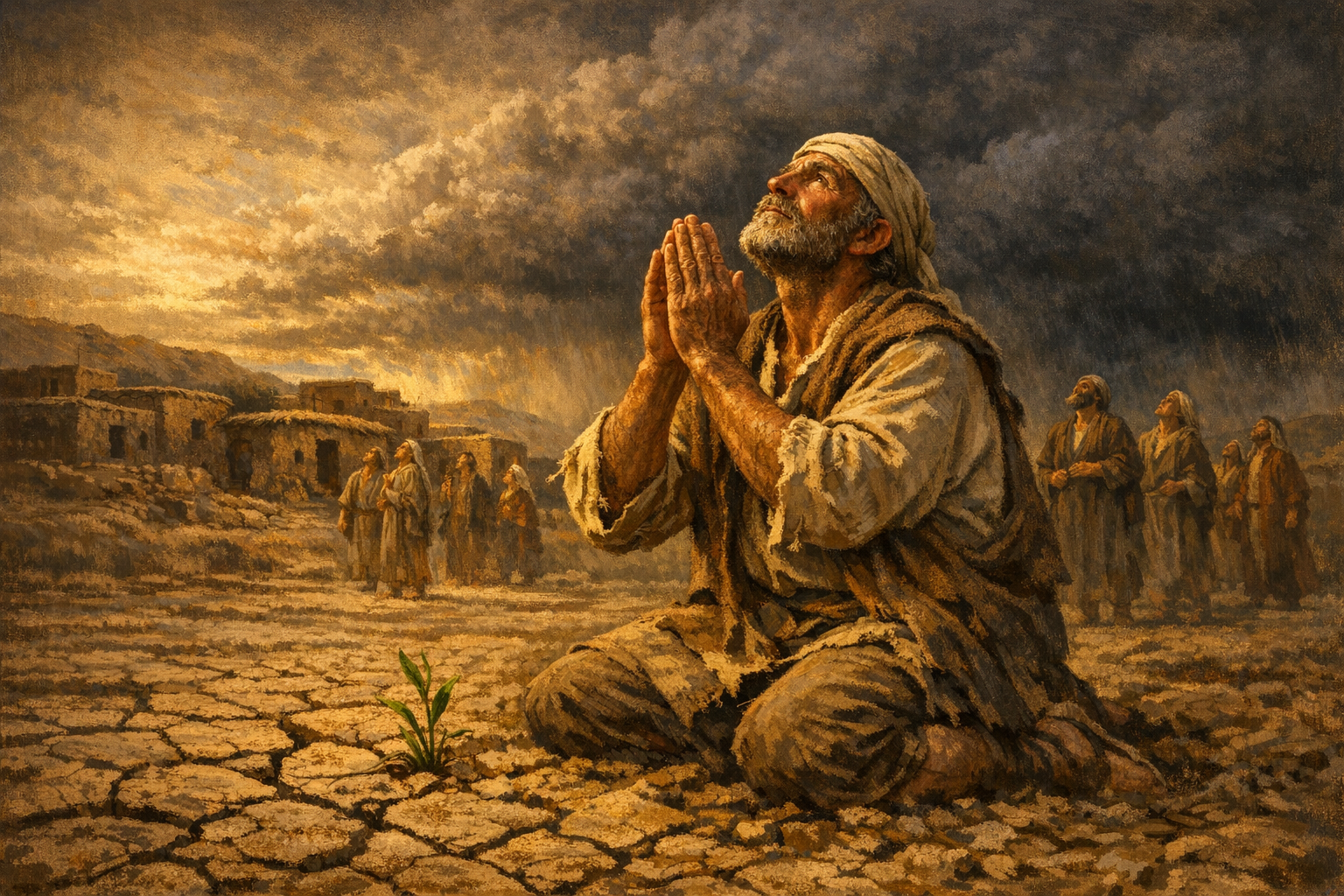
Praying for an Outpouring: The Latter Rain
Part of the Series: Awakening Spiritual Interest — Reaching Every Heart for God
There is a longing deep in the heart of every sincere believer — a longing not merely for personal blessing, but for something far greater: a mighty movement of God's Spirit that will awaken sleeping hearts, convict the lost, and bring the gospel to every nation before Christ returns. The Bible calls this great end-time outpouring the latter rain. It is not a vague spiritual metaphor. It is a specific, promised, prayed-for event that God has been preparing His people to receive since the days of the early apostles. This lesson invites you to examine what Scripture says about the latter rain, how we are to pray and prepare for it, and what role that outpouring plays in the final harvest of souls.
I. The Promise of Rain: An Agricultural Picture of Spiritual Reality
The ancient land of Israel depended on two critical seasons of rain. The former rain fell in autumn, softening the hard ground so that seed could be sown. The latter rain fell in spring, swelling the grain to full ripeness just before the harvest. Without the latter rain, the crop would wither and the harvest would fail. God used this well-known agricultural cycle as a picture of His Spirit's work in history and in the final days of earth.
"Be glad then, ye children of Zion, and rejoice in the LORD your God: for he hath given you the former rain moderately, and he will cause to come down for you the rain, the former rain, and the latter rain in the first month."
— Joel 2:23 (KJV)
The prophet Joel spoke these words to a people who had experienced devastation — locusts had stripped their land bare. Yet in the same chapter where God promises material restoration, He issues a still greater promise: a spiritual outpouring that would transcend every previous movement of His Spirit.
"And it shall come to pass afterward, that I will pour out my spirit upon all flesh; and your sons and your daughters shall prophesy, your old men shall dream dreams, your young men shall see visions: And also upon the servants and upon the handmaids in those days will I pour out my spirit."
— Joel 2:28–29 (KJV)
The apostle Peter, standing in Jerusalem on the Day of Pentecost, declared that the events of that morning were a fulfilment of Joel's prophecy (Acts 2:16–18). The former rain had come. The Spirit had been poured out on the early church with signs, conversions, and bold proclamation. Three thousand souls were added in a single day. But Pentecost was the beginning, not the end. The full harvest still lay ahead. The latter rain — the final, global outpouring — remains the great need of our hour.
II. The Latter Rain in the New Testament
The apostle James, writing to scattered believers, draws directly on the harvest imagery to encourage patient, expectant prayer:
"Be patient therefore, brethren, unto the coming of the Lord. Behold, the husbandman waiteth for the precious fruit of the earth, and hath long patience for it, until he receive the early and latter rain."
— James 5:7 (KJV)
Notice the connection James makes: the coming of the Lord and the latter rain are linked. The farmer does not harvest in the middle of winter. He waits for the rains that ripen the grain. In the same way, the Second Coming of Christ will be preceded by a great spiritual ripening — a final outpouring of the Holy Spirit that will empower God's people to proclaim the everlasting gospel to every nation, kindred, tongue, and people (Revelation 14:6). The latter rain is not a reward for the already-comfortable church; it is the divine equipment for the final mission.
James also makes a striking observation about the conditions under which God sends rain:
"Confess your faults one to another, and pray one for another, that ye may be healed. The effectual fervent prayer of a righteous man availeth much."
— James 5:16 (KJV)
Fervent, confessing, interceding prayer is the soil into which the latter rain falls. This is not ceremonial prayer — it is the honest, broken, persistent cry of hearts who know their need and who have surrendered pride and self-sufficiency to God.
III. How to Pray for the Latter Rain: Lessons from Zechariah
God does not pour out His Spirit on passive, indifferent congregations. He invites His people to ask — specifically, earnestly, and with expectation.
"Ask ye of the LORD rain in the time of the latter rain; so the LORD shall make bright clouds, and give them showers of rain, to every one grass in the field."
— Zechariah 10:1 (KJV)
The command is plain: Ask. The latter rain is not automatic. It is promised, but it is also prayed for. God sovereignly controls the outpouring, yet He has chosen to release it in response to the united, believing intercession of His people. This is not because prayer changes God's mind, but because the very act of asking forms in us the receptive, dependent character that can receive what God longs to give.
Consider the pattern of prayer that preceded the former rain. Before Pentecost, the disciples were not scattered to their separate concerns. They were gathered, unified, and persistent:
"These all continued with one accord in prayer and supplication, with the women, and Mary the mother of Jesus, and with his brethren."
— Acts 1:14 (KJV)
Ten days of unified, expectant, repentant prayer preceded the greatest single outpouring of the Spirit the world had yet seen. If the former rain required such preparation, how much more should we give ourselves to prayer as we seek the latter rain?
IV. The Purpose of the Latter Rain: Harvest, Not Entertainment
It must be clearly understood that the latter rain is not given for the personal spiritual excitement of believers. It is given for the harvest — for the ripening and gathering of souls. The prophet Hosea captures this missional urgency:
"Then shall we know, if we follow on to know the LORD: his going forth is prepared as the morning; and he shall come unto us as the rain, as the latter and former rain unto the earth."
— Hosea 6:3 (KJV)
To "follow on to know the LORD" is to pursue an ever-deepening relationship with God — not as an end in itself, but as the source from which all genuine ministry flows. The Spirit who falls as latter rain will not rest on hearts cluttered with worldliness, pride, or self-seeking. He comes to those who have been emptied of self and filled with a passion for God's glory and the salvation of the lost.
The book of Revelation describes the final proclamation of the gospel as a mighty angel whose glory lights the whole earth:
"And after these things I saw another angel come down from heaven, having great power; and the earth was lightened with his glory."
— Revelation 18:1 (KJV)
This global illumination is the latter rain in prophetic symbol — the Holy Spirit working through a Spirit-filled people to give the final, urgent invitation to all humanity before Christ returns. It is the fulfilment of the Great Commission on the grandest possible scale.
V. Preparing the Ground: Conditions for Receiving the Latter Rain
Scripture is consistent: God's Spirit is not poured out on hearts that are unprepared. Several conditions emerge from the biblical text.
1. Genuine Repentance and Confession
"Therefore also now, saith the LORD, turn ye even to me with all your heart, and with fasting, and with weeping, and with mourning: And rend your heart, and not your garments, and turn unto the LORD your God: for he is gracious and merciful, slow to anger, and of great kindness, and repenteth him of the evil."
— Joel 2:12–13 (KJV)
The context of Joel's latter rain promise is a call to corporate repentance. The outpouring follows the turning. This is not salvation by works — it is the natural fruit of hearts that have been genuinely transformed by grace. Repentance does not earn the Spirit; it removes the barriers that block His work.
2. Unity Among Believers
"Behold, how good and how pleasant it is for brethren to dwell together in unity! It is like the precious ointment upon the head, that ran down upon the beard, even Aaron's beard: that went down to the skirts of his garments; As the dew of Hermon, and as the dew that descended upon the mountains of Zion: for there the LORD commanded the blessing, even life for evermore."
— Psalm 133:1–3 (KJV)
The psalmist compares the blessing of unity to dew — a form of moisture, refreshment, and life. Where God's people are divided by pride, bitterness, or competition, the Spirit is grieved. Unity — not uniformity, but Spirit-produced love and cooperation — is the climate in which the latter rain falls.
3. Surrender and Sanctification
"I beseech you therefore, brethren, by the mercies of God, that ye present your bodies a living sacrifice, holy, acceptable unto God, which is your reasonable service. And be not conformed to this world: but be ye transformed by the renewing of your mind, that ye may prove what is that good, and acceptable, and perfect, will of God."
— Romans 12:1–2 (KJV)
Sanctification — the Spirit's ongoing work of transforming the believer into the image of Christ — is not the condition for earning salvation, but it is the condition for being a usable vessel. Justification by faith in Christ's atoning sacrifice brings us into right standing before God; sanctification by the Spirit's power shapes us into instruments fit for His use. The latter rain will not fill vessels that are cracked with worldliness and compromise.
4. Persistent, United Prayer
"And he spake a parable unto them to this end, that men ought always to pray, and not to faint."
— Luke 18:1 (KJV)
Jesus Himself taught that persistent prayer is the mark of genuine faith. The latter rain will not fall on a church that has given up asking. God's people must cultivate a culture of prayer — personal prayer, family prayer, small-group prayer, corporate prayer — that keeps the door of heaven open and the heart of the church expectant.
VI. The Latter Rain and the Second Coming
The latter rain is not an isolated blessing. It is the final act of preparation before the most glorious event in history: the literal, visible, personal return of Jesus Christ. Paul describes that moment with breathtaking clarity:
"For the Lord himself shall descend from heaven with a shout, with the voice of the archangel, and with the trump of God: and the dead in Christ shall rise first: Then we which are alive and remain shall be caught up together with them in the clouds, to meet the Lord in the air: and so shall we ever be with the Lord."
— 1 Thessalonians 4:16–17 (KJV)
The latter rain ripens the harvest. The Second Coming gathers it. Between now and that glorious day, every soul that is reached by a Spirit-filled witness is a grain added to the harvest. This is why praying for the latter rain is not a passive, mystical exercise — it is a declaration of missional readiness. We are asking God to equip us to reach every heart, in every place, before the Husbandman returns for His precious fruit.
Reflection Questions
- Joel 2:28–29 promises that the Spirit will be poured out on all flesh — sons, daughters, old men, young men, servants, and handmaids. What does this breadth of the promise tell you about who God intends to use in the final harvest? Are there ways you have disqualified yourself in your own mind that God's Word does not support?
- Zechariah 10:1 commands us to ask for the latter rain. How specific and persistent is your personal prayer for a fresh outpouring of the Holy Spirit? What practical changes could you make to your prayer life this week?
- James 5:16 connects effective prayer with confessing faults to one another. Is there unconfessed sin, unresolved conflict, or unaddressed pride in your life or in your congregation that may be hindering the Spirit's work? What steps does the Spirit prompt you to take?
- Romans 12:1–2 calls believers to present themselves as living sacrifices. In what areas of your daily life — habits, entertainment, relationships, use of time — do you sense the Spirit calling you to a deeper surrender so that you become a more useful vessel for the harvest?
- Revelation 18:1 pictures the earth being lightened by the glory of God's Spirit through His people. What would it look like for your local church to be a community so filled with the Spirit that its witness genuinely illuminates your neighborhood, city, or region? What is one concrete step your group could take together toward that vision?
Practical Application
This Week: Become a Latter Rain Intercessor
Choose one specific, practical commitment from the list below and begin this week. Share your commitment with at least one other believer so that you can pray for and encourage each other.
- Daily intercession: Set aside ten minutes each morning to pray specifically for the outpouring of the Holy Spirit — on your church, your community, and the global mission of God's people. Use Zechariah 10:1 as your prayer anchor: Ask ye of the LORD rain in the time of the latter rain.
- Corporate prayer: Propose or join a weekly prayer gathering in your congregation focused specifically on revival and the latter rain. Invite others who share this burden.
- Personal surrender: Identify one area of compromise or worldly attachment that may be grieving the Spirit in your life. Bring it before God in honest confession this week and ask Him to fill that space with His presence.
- Missional readiness: Pray over a list of three to five people in your life who do not yet know Christ. Ask God to use you as a Spirit-empowered witness to each of them, and look for the open doors He provides.
- Unity building: Reach out to a fellow believer with whom you have experienced tension or distance. Seek reconciliation and pray together, even briefly — because where brethren dwell in unity, the LORD commands the blessing (Psalm 133:3).
The latter rain is coming. God has promised it. He is calling His people to ask for it, prepare for it, and be used by it. May every heart in our study community be found ready — emptied of self, filled with the Spirit, and burning with a passion to reach every heart for God before our Lord returns.