
Christ Crucified: The Center of Every Appeal
Why the Gospel Is the Engine: The Message That Makes Disciples • ~10 min read
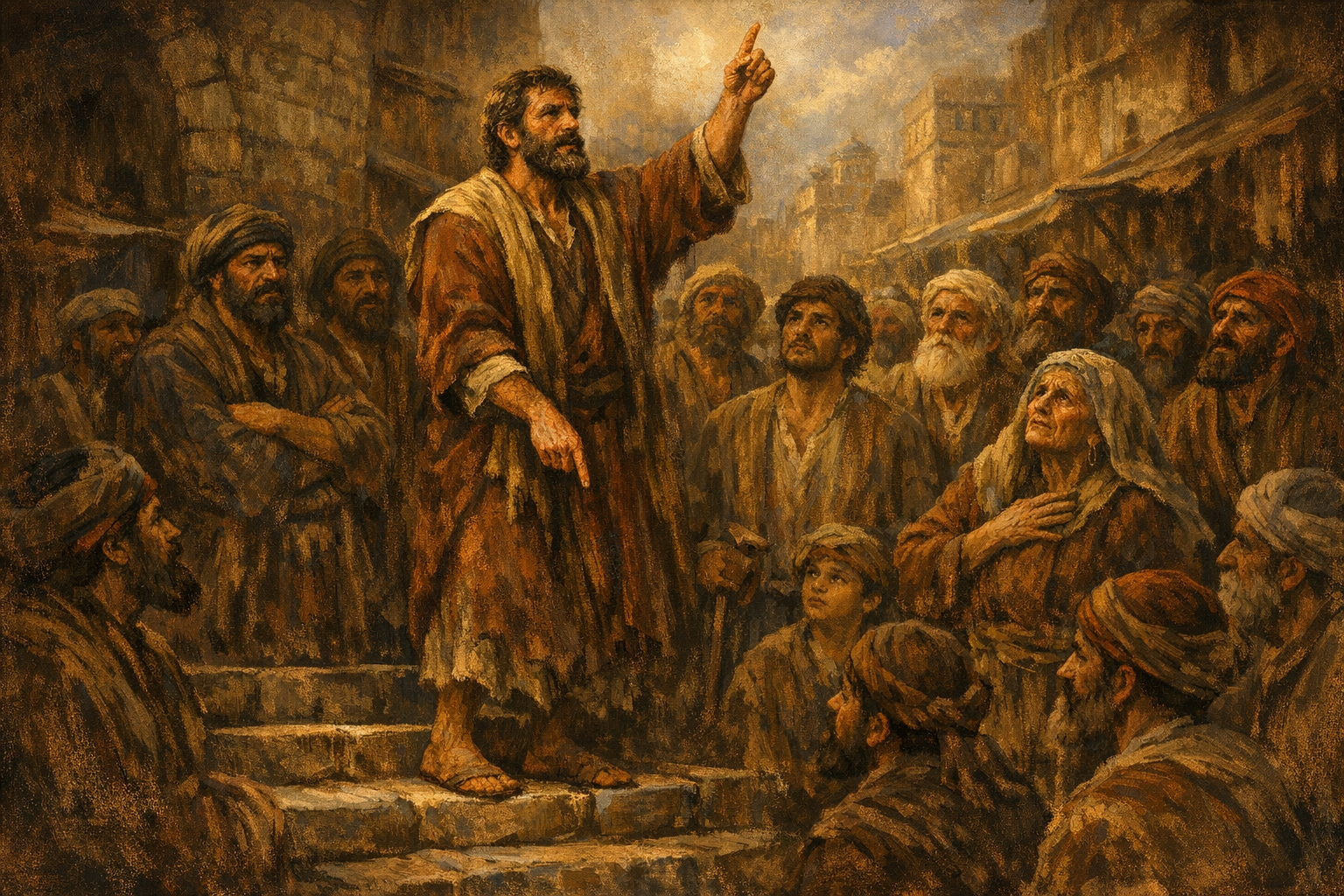
Christ Crucified: The Center of Every Appeal
Part of the Series: Awakening Spiritual Interest: Reaching Every Heart for God
Every generation of believers faces the temptation to make the gospel more palatable—to soften its edges, dress it in the fashions of the age, or bury it beneath programs, personalities, and persuasive technique. Yet the apostolic record is unmistakable: the one message that breaks hard hearts, awakens sleeping consciences, and draws wandering souls back to God is the proclamation of a crucified, risen, and interceding Saviour. This lesson explores why the cross must stand at the center of every appeal we make to every heart we seek to reach.
1. Paul's Deliberate Choice: Nothing But Christ Crucified
When Paul arrived in the sophisticated city of Corinth—a city proud of its philosophers, its orators, and its gods—he made a conscious, counter-cultural decision about his message.
"For I determined not to know any thing among you, save Jesus Christ, and him crucified." — 1 Corinthians 2:2 (KJV)
This was not intellectual poverty on Paul's part. The same man wrote the majestic theology of Romans and Galatians. His choice was strategic and Spirit-led. He understood that eloquence without the cross produces admirers, not disciples. A few verses earlier he had stated:
"For the preaching of the cross is to them that perish foolishness; but unto us which are saved it is the power of God." — 1 Corinthians 1:18 (KJV)
Notice the contrast: foolishness to those who are perishing, the power of God to those who are being saved. The cross is not one doctrine among many; it is the axis around which all other truth revolves. It is the power-source of every genuine spiritual awakening. When we are tempted to lead with social relevance, cultural cleverness, or theological novelty, we must return to this anchor: the power to awaken hearts belongs to the message of Christ crucified, not to the messenger's skill.
2. The Magnetic Pull of the Lifted-Up Saviour
Jesus Himself explained the drawing power of His death in language that should shape every evangelistic appeal:
"And I, if I be lifted up from the earth, will draw all men unto me." — John 12:32 (KJV)
The word "lifted up" carries a double meaning: the physical lifting of Jesus on the cross and the exaltation of His name in proclamation. Both acts draw. Both are necessary. When we lift up Christ in our preaching, our personal witness, our conversations, and our service, His own magnetic grace does the work that no human persuasion can accomplish. The evangelist is not the attraction—the crucified and risen Christ is.
This truth has profound implications for how we approach every person. Whether we are speaking to a grieving neighbor, a skeptical colleague, a wayward church member, or a seeker who has never opened a Bible, the appeal that reaches the deepest part of the human heart is the same: Behold the Lamb of God who takes away the sin of the world. Every other truth we teach finds its meaning and its motive in that central reality.
3. The Gospel Defined: Justification by Faith in Christ's Atoning Sacrifice
To place Christ crucified at the center of every appeal, we must be clear about what the cross actually accomplished. Paul provides the clearest summary in his letter to the Romans:
"But now the righteousness of God without the law is manifested, being witnessed by the law and the prophets; Even the righteousness of God which is by faith of Jesus Christ unto all and upon all them that believe: for there is no difference: For all have sinned, and come short of the glory of God; Being justified freely by his grace through the redemption that is in Christ Jesus: Whom God hath set forth to be a propitiation through faith in his blood, to declare his righteousness for the remission of sins that are past, through the forbearance of God." — Romans 3:21–25 (KJV)
Three movements pulse through these verses. First, the diagnosis: "all have sinned, and come short of the glory of God." No appeal can succeed that sidesteps this reality. Until a person sees their own need, the cross looks unnecessary. Second, the remedy: justification—being declared righteous before God—comes "freely by his grace through the redemption that is in Christ Jesus." Salvation is not earned; it is received. It is not the reward of accumulated virtue; it is the gift of undeserved grace. Third, the mechanism: Christ is the "propitiation"—the atoning sacrifice—whose blood satisfies divine justice and opens the way for guilty sinners to be forgiven and restored.
Obedience, character transformation, and holy living flow from this grace as its fruit, not as its foundation. We do not obey in order to be saved; we obey because we are saved and because the Spirit of the risen Christ is at work within us. The cross both forgives the guilt of sin (justification) and begins the lifelong process of uprooting sin's power from the character (sanctification). Both are gifts of grace; neither is our own achievement.
4. Christ's Ongoing Ministry: From the Cross to the Heavenly Sanctuary
The cross was not the end of Christ's saving work. The risen, ascended Jesus continues to minister on behalf of every soul who responds to the gospel appeal. The writer of Hebrews anchors our hope in this ongoing intercession:
"Seeing then that we have a great high priest, that is passed into the heavens, Jesus the Son of God, let us hold fast our profession. For we have not an high priest which cannot be touched with the feeling of our infirmities; but was in all points tempted like as we are, yet without sin. Let us therefore come boldly unto the throne of grace, that we may obtain mercy, and find grace to help in time of need." — Hebrews 4:14–16 (KJV)
Every person we seek to reach needs to know not only that Christ died for their sins but that He lives to represent them before the Father. He is not a distant historical figure; He is an active, compassionate High Priest in the heavenly sanctuary, applying the merits of His atoning blood on behalf of every repentant soul. This truth transforms the appeal we make: we are not inviting people to subscribe to a philosophy or join an institution—we are inviting them into a living relationship with a Saviour who is at this moment interceding for them by name.
5. The Foolishness That Confounds the Wise
One of the greatest barriers to placing Christ crucified at the center of every appeal is self-consciousness about how the message will be received. Paul confronted this barrier directly:
"For the Jews require a sign, and the Greeks seek after wisdom: But we preach Christ crucified, unto the Jews a stumblingblock, and unto the Greeks foolishness; But unto them which are called, both Jews and Greeks, Christ the power of God, and the wisdom of God. Because the foolishness of God is wiser than men; and the weakness of God is stronger than men." — 1 Corinthians 1:22–25 (KJV)
Paul acknowledges that the cross offends. It offends human pride because it says we cannot save ourselves. It offends human wisdom because it operates through apparent weakness and shame. Yet this "foolishness" is the very wisdom and power of God. When we are tempted to soften the cross to make it more acceptable, we risk draining it of the very power that makes it effective. Our task is not to make the cross palatable but to make it plain—and then to trust God to do what only God can do in the hearts of those who hear.
6. The Scope of the Appeal: Every Heart, Every Nation
The cross is not a culturally limited message. The atoning sacrifice of Jesus Christ is the answer to the universal human condition of sin and separation from God. John's vision of the redeemed confirms this:
"And they sung a new song, saying, Thou art worthy to take the book, and to open the seals thereof: for thou wast slain, and hast redeemed us to God by thy blood out of every kindred, and tongue, and people, and nation." — Revelation 5:9 (KJV)
Every heart we seek to reach—regardless of background, culture, age, or history—is a heart for whom Christ was slain. This is the ground of our confidence in outreach. We are not offering a regional religion or a tribal tradition. We are proclaiming a universal Saviour whose blood was shed for the entire human family. The appeal of the cross crosses every barrier that divides humanity.
7. Carrying the Cross Into Every Appeal
How does this theology become practice? Paul's model in Galatians shows us that the preaching of Christ crucified was so vivid, so concrete, so personally compelling that it was as though the cross was set before the listeners' eyes:
"O foolish Galatians, who hath bewitched you, that ye should not obey the truth, before whose eyes Jesus Christ hath been evidently set forth, crucified among you?" — Galatians 3:1 (KJV)
To "set forth" Christ crucified is to make the cross vivid, personal, and present—not merely to mention it as a theological category. In every Bible study, every personal conversation, every act of compassionate service, we look for the moment to show the person before us that the cross is not ancient history but present reality: Christ died for them, Christ rose for them, Christ intercedes for them, and Christ is coming again for them.
The second coming of Christ—that literal, visible, personal return described in the apostolic witness—is itself the final expression of the same love displayed at Calvary. The One who was lifted up on the cross will be seen coming in the clouds of heaven. The appeal of the cross does not end at conversion; it carries the believer all the way to that glorious day.
"For the Lord himself shall descend from heaven with a shout, with the voice of the archangel, and with the trump of God: and the dead in Christ shall rise first: Then we which are alive and remain shall be caught up together with them in the clouds, to meet the Lord in the air: and so shall we ever be with the Lord." — 1 Thessalonians 4:16–17 (KJV)
From the cross to the cloud—every appeal, every invitation, every act of outreach is framed by this story. Christ crucified is not merely the starting point of the Christian life; He is its sustaining center from first call to final glory.
Reflection Questions
- Paul said he was determined to know nothing among the Corinthians "save Jesus Christ, and him crucified" (1 Corinthians 2:2, KJV). In your own witness and outreach, what things most often compete with the cross for the center of your message? How can you intentionally reorder your priorities?
- Jesus said, "And I, if I be lifted up from the earth, will draw all men unto me" (John 12:32, KJV). What does it mean practically to "lift up" Christ in a personal conversation, a small group study, or a community service project? How is this different from simply talking about religion or morality?
- Romans 3:21–25 (KJV) describes justification as coming "freely by his grace." How does a clear understanding of grace-based justification change the tone and content of the appeal we make to people who feel too sinful or too broken to be accepted by God?
- Hebrews 4:14–16 (KJV) presents Jesus as a High Priest who is "touched with the feeling of our infirmities." How does the truth of Christ's ongoing intercessory ministry in the heavenly sanctuary deepen the invitation we extend to hurting people? How might you weave this truth into a gospel conversation?
- Revelation 5:9 (KJV) pictures the redeemed from "every kindred, and tongue, and people, and nation." What barriers—cultural, social, or personal—tend to limit the scope of your outreach? How does the universal scope of the atonement challenge you to broaden your reach?
Practical Application
This week, identify one person in your sphere of influence who does not yet know Christ. Before you speak to them about faith, spend time in prayer asking God to show you how to "set forth" Christ crucified specifically for that person's situation—their pain, their questions, their longing. Then, in your next natural conversation with them, look for one genuine opportunity to point to what Jesus has done, is doing, and will do for them. You do not need a formal presentation; you need a cross-centered sentence spoken in love. Trust the promise: "I, if I be lifted up from the earth, will draw all men unto me" (John 12:32, KJV). The drawing power belongs to Him. Your responsibility is simply to lift Him up.