
A God Who Seeks the Lost
Why God Pursues: His Heart for Every Disciple • ~10 min read
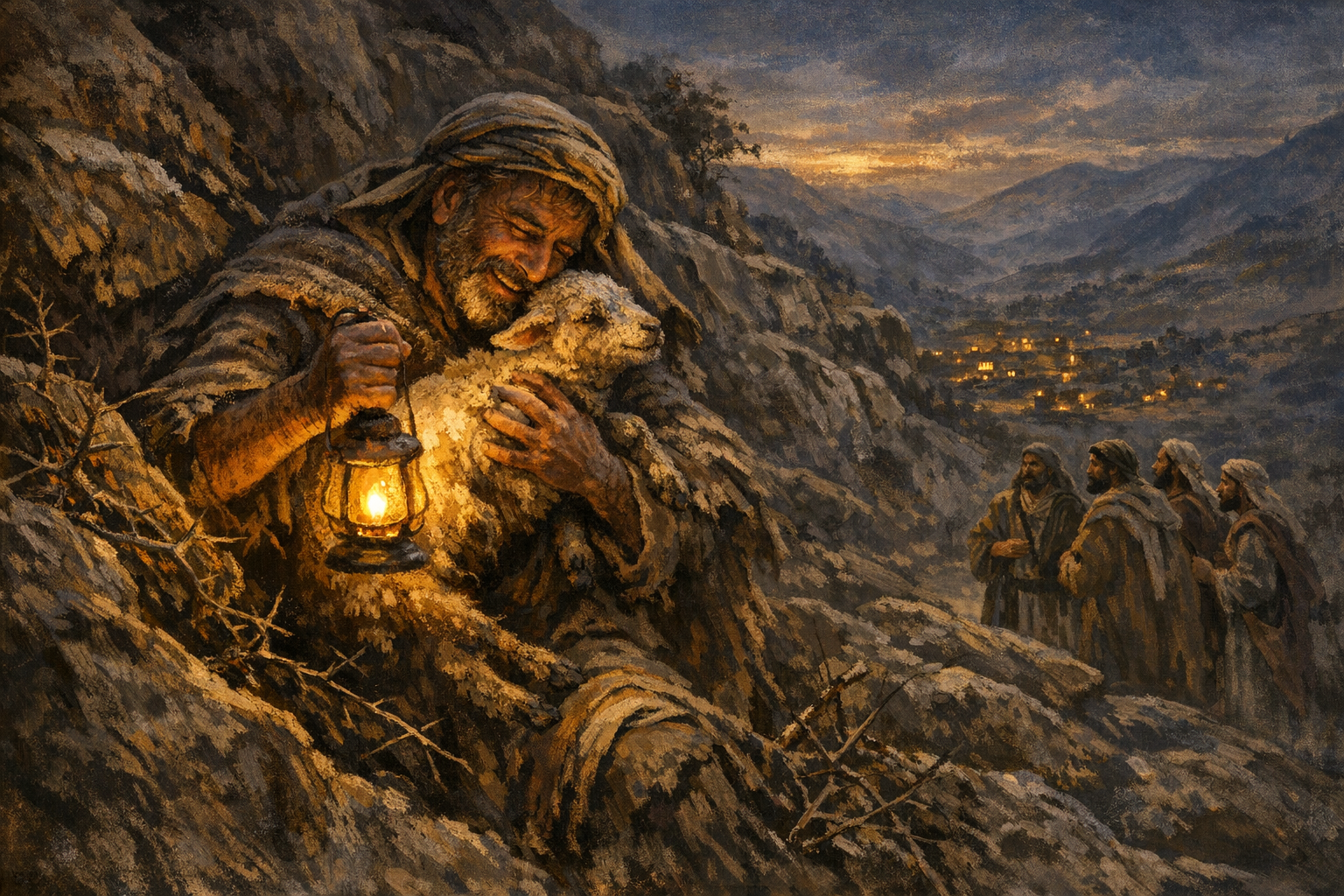
A God Who Seeks the Lost
Part of the Series: Awakening Spiritual Interest: Reaching Every Heart for God
Introduction
One of the most breathtaking truths in all of Scripture is this: before we ever thought to look for God, God was already looking for us. From the garden of Eden, where a grieving Creator called out to a hiding Adam, "Where art thou?" (Genesis 3:9, KJV), to the hills of Judea where a shepherd leaves ninety-nine sheep to find one that is lost, the entire Bible pulses with the heartbeat of a God who seeks. This lesson invites us to sit with that reality — not merely as a doctrine to affirm, but as a living truth that ought to reshape how we see every person around us and how we participate in God's great search-and-rescue mission.
Scripture Foundation: Luke 15 — The Chapter of the Lost
Luke 15 is perhaps the most concentrated expression of the seeking heart of God in the entire New Testament. It opens with a complaint from the religious establishment and ends with a father running down a dusty road. Three parables — the lost sheep, the lost coin, and the lost son — each illuminate a different facet of divine pursuit. Notice how Jesus frames the entire chapter:
"Then drew near unto him all the publicans and sinners for to hear him. And the Pharisees and scribes murmured, saying, This man receiveth sinners, and eateth with them."
— Luke 15:1-2 (KJV)
The complaint of the Pharisees becomes the occasion for the most tender teaching on grace in the Gospels. Jesus does not defend Himself with argument; He tells stories. And in each story, the seeker is not the lost one — the seeker is the one with power and love enough to go after what is missing.
The Lost Sheep: Heaven's Initiative
"What man of you, having an hundred sheep, if he lose one of them, doth not leave the ninety and nine in the wilderness, and go after that which is lost, until he find it? And when he hath found it, he layeth it on his shoulders, rejoicing. And when he cometh home, he calleth together his friends and neighbours, saying unto them, Rejoice with me; for I have found my sheep which was lost. I say unto you, that likewise joy shall be in heaven over one sinner that repenteth, more than over ninety and nine just persons, which need no repentance."
— Luke 15:4-7 (KJV)
The shepherd does not wait for the sheep to find its way back. Sheep that have wandered cannot navigate home on their own — they are entirely dependent on being found. This is a portrait of our spiritual condition apart from God. The apostle Paul confirms it plainly:
"For all have sinned, and come short of the glory of God."
— Romans 3:23 (KJV)
And again, echoing the prophet Isaiah:
"As it is written, There is none righteous, no, not one: There is none that understandeth, there is none that seeketh after God."
— Romans 3:10-11 (KJV)
Left to ourselves, we do not seek God — we hide from Him, as Adam did. Yet the shepherd goes out "until he find it." There is no half-hearted search here. The Greek word translated "until" (Greek: heōs) implies persistent, unrelenting effort. God's seeking is not casual; it is covenantal. Notice also where the sheep ends up: not dragged back by the neck, but laid gently on the shepherd's shoulders. The image of Christ carrying the lost one is a picture of the gospel itself — the burden of our sin and lostness borne by Him, not by us.
The Lost Coin: The Relentless Light
"Either what woman having ten pieces of silver, if she lose one piece, doth not light a candle, and sweep the house, and seek diligently till she find it? And when she hath found it, she calleth her friends and her neighbours together, saying, Rejoice with me; for I have found the piece which I had lost. Likewise, I say unto you, there is joy in the presence of the angels of God over one sinner that repenteth."
— Luke 15:8-10 (KJV)
A coin cannot seek itself. It lies where it fell, inert, without awareness of its own lostness. This parable addresses those who are spiritually unconscious of their condition — those who do not even know they are lost. The woman's response is to light a candle. In Scripture, light is consistently associated with God's Word and the Holy Spirit's convicting work. The psalmist declares:
"Thy word is a lamp unto my feet, and a light unto my path."
— Psalm 119:105 (KJV)
When we share Scripture with someone, when we invite a neighbour to study the Bible, when we pray that the Holy Spirit will open a friend's eyes — we are cooperating with the woman who lights the candle. The Holy Spirit is the divine Seeker working through human instruments to illuminate every dark corner where a lost soul may lie. Jesus promised this ministry of the Spirit explicitly:
"And when he is come, he will reprove the world of sin, and of righteousness, and of judgment."
— John 16:8 (KJV)
The Lost Son: The Father Who Runs
"And he arose, and came to his father. But when he was yet a great way off, his father saw him, and had compassion, and ran, and fell on his neck, and kissed him."
— Luke 15:20 (KJV)
In this third parable, the lost one does return — but note carefully: the father does not wait on the porch with arms folded. He has been watching. He sees his son "yet a great way off," which implies he had been scanning the horizon. When recognition comes, dignity is abandoned; the father runs. In first-century Middle Eastern culture, a dignified elder running in public was a remarkable, even scandalous act of love. This is God's posture toward every returning sinner.
The son rehearses a speech of unworthiness: "I am no more worthy to be called thy son: make me as one of thy hired servants" (Luke 15:19, KJV). But the father does not negotiate terms of re-entry. He calls for the best robe, a ring, and sandals — symbols of full sonship restored, not probationary status. This is the heart of justification by grace through faith. Paul writes:
"Therefore being justified by faith, we have peace with God through our Lord Jesus Christ: By whom also we have access by faith into this grace wherein we stand, and rejoice in hope of the glory of God."
— Romans 5:1-2 (KJV)
The robe placed on the son's shoulders is a picture of the righteousness of Christ imputed to the repentant sinner. The returning son brings nothing but his ruin; the father provides everything needed for restoration. This is not a licence for continued rebellion — the son did "come to himself" (Luke 15:17, KJV), and genuine repentance preceded his return. But the basis of his acceptance was entirely the father's grace, not the quality of his repentance.
The Elder Brother: The Danger of a Closed Heart
Jesus does not end the parable with the feast. He ends it with a troubling figure standing outside in the dark — the elder brother, who is angry and will not go in (Luke 15:28, KJV). The father goes out to him too, pleading: "Son, thou art ever with me, and all that I have is thine" (Luke 15:31, KJV). The elder brother represents those who have been near the Father all their lives yet have never caught the Father's heart for the lost. Religious proximity without compassion is its own form of lostness.
The Pharisees who murmured in verse 2 are mirrored in the elder brother. The very people who should have been rejoicing that sinners were drawing near to Jesus were instead standing outside, bitter. This is a solemn warning to every community of faith: it is possible to keep the commandments outwardly, attend worship faithfully, and yet be entirely out of step with God's seeking heart. The prophet Ezekiel records the divine grief over this very attitude:
"Say unto them, As I live, saith the Lord GOD, I have no pleasure in the death of the wicked; but that the wicked turn from his way and live: turn ye, turn ye from your evil ways; for why will ye die, O house of Israel?"
— Ezekiel 33:11 (KJV)
God's Seeking Heart Across Scripture
Luke 15 does not stand alone. The seeking God is the God of the whole Bible. Consider these anchoring texts that frame the grand narrative of redemption:
"For the Son of man is come to seek and to save that which was lost."
— Luke 19:10 (KJV)
"For God so loved the world, that he gave his only begotten Son, that whosoever believeth in him should not perish, but have everlasting life. For God sent not his Son into the world to condemn the world; but that the world through him might be saved."
— John 3:16-17 (KJV)
"The Lord is not slack concerning his promise, as some men count slackness; but is longsuffering to us-ward, not willing that any should perish, but that all should come to repentance."
— 2 Peter 3:9 (KJV)
These verses reveal that the cross was not an afterthought — it was the ultimate expression of a God who seeks. Christ's atoning sacrifice on Calvary was the Father running down the road of all human history to embrace a lost race. And today, that same Christ ministers as our High Priest in the heavenly sanctuary, interceding for every soul who comes to the Father through Him:
"Wherefore he is able also to save them to the uttermost that come unto God by him, seeing he ever liveth to make intercession for them."
— Hebrews 7:25 (KJV)
Joining the Search: The Church as God's Instrument
God seeks the lost — and He invites His people to seek with Him. The Great Commission is not merely a command; it is an invitation to share the Father's own passion:
"Go ye therefore, and teach all nations, baptizing them in the name of the Father, and of the Son, and of the Holy Ghost: Teaching them to observe all things whatsoever I have commanded you: and, lo, I am with you alway, even unto the end of the world. Amen."
— Matthew 28:19-20 (KJV)
Notice that the commission flows from the authority of the risen Christ ("All power is given unto me," Matthew 28:18, KJV) and is accompanied by His perpetual presence. We do not go in our own strength or wisdom. We go as people who have ourselves been found, carrying the candle of God's Word into the dark places where others lie lost. The apostle Paul understood his own ministry in exactly these terms:
"For I am not ashamed of the gospel of Christ: for it is the power of God unto salvation to every one that believeth; to the Jew first, and also to the Greek."
— Romans 1:16 (KJV)
Every act of genuine outreach — a Bible study offered, a meal shared, a prayer prayed with a neighbour, a word of testimony spoken in love — is a participation in the Father's run down the road. The church that has caught the heart of Luke 15 will not merely maintain its own spiritual comfort; it will be perpetually moving toward those who are "yet a great way off."
Reflection Questions
- In the parable of the lost sheep, the shepherd leaves the ninety-nine to pursue the one. What does this reveal about how God values individual people? How does this challenge the way you think about the "one" person in your own life who seems far from God?
- The lost coin had no awareness of being lost. Who in your community might be in a similar condition — unaware of their spiritual need? What does the woman's action of lighting a candle and sweeping suggest about how we should approach reaching them?
- The returning son "came to himself" before he came to his father (Luke 15:17, KJV). What role does genuine self-awareness and repentance play in our coming to God? How does this balance with the truth that the father's acceptance was entirely gracious, not earned?
- The elder brother had been near the father all along yet did not share the father's joy. In what ways can religious familiarity actually harden us against compassion for the lost? What is the antidote?
- Hebrews 7:25 (KJV) assures us that Christ "ever liveth to make intercession" for those who come to God through Him. How does the reality of Christ's ongoing high-priestly ministry in the heavenly sanctuary give you confidence and urgency in sharing the gospel with others?
Practical Application
This week, identify one person in your life who is, in some sense, "lost" — perhaps someone who has drifted from faith, someone who has never known God, or someone who is hurting and unaware that God is seeking them. Write that person's name down and commit to praying for them daily this week, asking the Holy Spirit to light a candle in their heart. Then take one concrete step toward them: send a message, invite them to share a meal, offer to study the Bible together, or simply be present with them in their need. Remember: you are not responsible for their response — only for going. The Father will do the running.