
Understanding Difficult Passages (Part 1) • ~10 min read
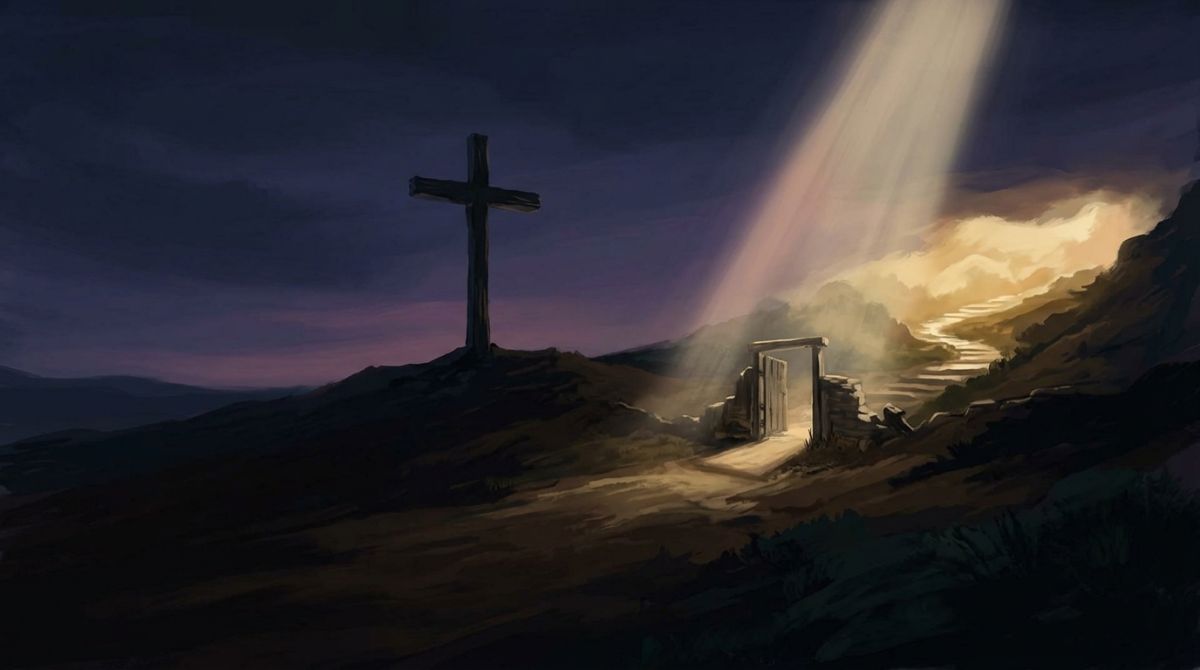
Welcome to our study on the fascinating and often misunderstood topic of the state of the dead. Today, we're diving into one of the most frequently quoted passages that seems to suggest an immediate ascent to heaven after death: Jesus' words to the dying thief on the cross. We’ll carefully examine this passage, considering its context, the original language, and what other Scriptures reveal about Jesus’ own experience after His death. Our goal is to let the Bible speak for itself, unraveling any confusion and strengthening our hope in God’s promises.
Let's begin by setting the scene at Calvary, where Jesus hung between two criminals. One of them, in his final moments, recognized something divine in Jesus, even in His suffering.
And one of the malefactors which were hanged railed on him, saying, If thou be Christ, save thyself and us.
Luke 23:39-43
But the other answering rebuked him, saying, Dost not thou fear God, seeing thou art in the same condemnation?
And we indeed justly; for we receive the due reward of our deeds: but this man hath done nothing amiss.
And he said unto Jesus, Lord, remember me when thou comest into thy kingdom.
And Jesus said unto him, Verily I say unto thee, Today shalt thou be with me in paradise.
The thief's plea, "Lord, remember me when thou comest into thy kingdom," was a remarkable expression of faith. Jesus' response, "Verily I say unto thee, Today shalt thou be with me in paradise," is often understood to mean that the thief went directly to heaven with Jesus on that very day. However, a closer look at the original Greek and other Scriptures reveals a different understanding.
It's important to remember that ancient Greek manuscripts did not include punctuation such as commas. Punctuation was added much later by translators to aid understanding. This means the placement of the comma in Luke 23:43 profoundly affects its meaning. Consider the two possibilities:
Given the context of Jesus' own experience after death, which we will now explore, the second punctuation aligns more accurately with the overall biblical narrative.
If Jesus and the thief went to paradise on Friday, we would expect to find evidence of this in Scripture. However, just three days later, on Sunday morning, Jesus made a very clear statement about His whereabouts after His resurrection:
Jesus saith unto her, Touch me not; for I am not yet ascended to my Father: but go to my brethren, and say unto them, I ascend unto my Father, and your Father; and to my God, and your God.
John 20:17
Notice Jesus' words to Mary Magdalene: "I am not yet ascended to my Father." This statement is crucial. If Jesus Himself had not yet ascended to His Father in heaven (which is what "paradise" often refers to in a heavenly context, see 2 Corinthians 12:2-4 or Revelation 2:7), then He could not have taken the thief there on Friday. Jesus spent the time between His death and resurrection in the tomb, in a state of sleep, awaiting His resurrection. His promise to the thief was sure, but its fulfillment was not immediate on that Friday.
The Bible consistently teaches that death is a sleep, and the hope for believers is the resurrection. Jesus Himself experienced this "sleep" in death, as foreshadowed in the Old Testament:
For thou wilt not leave my soul in hell; neither wilt thou suffer thine Holy One to see corruption.
Psalm 16:10
The Apostle Peter later applied this prophecy directly to Jesus:
Because thou wilt not leave my soul in hell, neither wilt thou suffer thine Holy One to see corruption.
Acts 2:27, 31
He seeing this before spake of the resurrection of Christ, that his soul was not left in hell, neither his flesh did see corruption.
"Hell" here refers to the grave (Hades in Greek, Sheol in Hebrew), not a place of burning torment. Jesus' "soul" (His life, His being) was in the grave. He did not go to heaven or a "paradise" on Friday, but rested until His resurrection on Sunday. The thief's promise, therefore, would be fulfilled at the resurrection, when Jesus truly comes in His kingdom.
The Bible consistently points to a future resurrection as the time when believers receive their reward and enter God's kingdom. Jesus taught:
Marvel not at this: for the hour is coming, in the which all that are in the graves shall hear his voice,
John 5:28-29
And shall come forth; they that have done good, unto the resurrection of life; and they that have done evil, unto the resurrection of damnation.
The thief's request, "remember me when thou comest into thy kingdom," aligns perfectly with this understanding of a future resurrection and the establishment of God's kingdom. Jesus' promise was a guarantee of future life with Him, not an immediate journey to paradise on the day of His death.
By carefully examining Luke 23:43 in light of its original context and the clear testimony of other Scriptures, we find a consistent and hopeful message. The absence of punctuation in the original Greek allows for an understanding that harmonizes with Jesus' own declaration that He had not yet ascended to His Father on Sunday morning (John 20:17). The promise to the thief was absolute and certain, but its fulfillment awaits the glorious resurrection when Jesus returns in His kingdom, bringing all His faithful with Him to the ultimate "paradise" – the new earth.
This understanding does not diminish the grace and power of Jesus' promise, but rather places it within the larger, consistent biblical narrative of death as a sleep and the resurrection as our blessed hope.