
Understanding Difficult Passages (Part 2) • ~10 min read
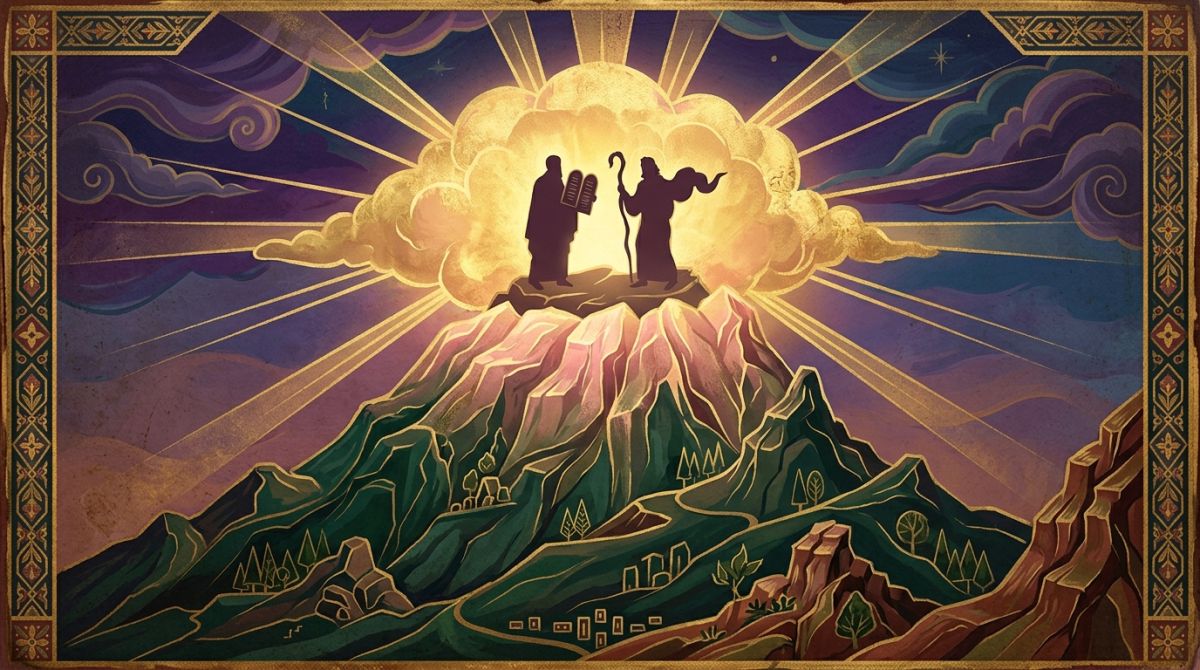
Welcome back to our study on the biblical understanding of death, hope, and resurrection! We've spent time exploring what the Bible generally teaches about the state of the dead – a peaceful "sleep" awaiting the resurrection. Today, we're going to look at some very special cases that, far from contradicting this truth, actually strengthen our understanding of God's incredible power over death: the appearances of Moses and Elijah on the Mount of Transfiguration. These two individuals experienced unique departures from this world, serving as powerful examples of God's plan for His faithful children.
First, let's consider Moses. The Bible is clear about his death and burial:
5So Moses the servant of the LORD died there in the land of Moab, according to the word of the LORD.
Deuteronomy 34:5-6
6And he buried him in a valley in the land of Moab, over against Bethpeor: but no man knoweth of his sepulchre unto this day.
Moses died and was buried by God Himself. Yet, a fascinating passage in the New Testament gives us a hint that his story didn't end there:
Yet Michael the archangel, when contending with the devil he disputed about the body of Moses, durst not bring against him a railing accusation, but said, The Lord rebuke thee.
Jude 1:9
Why would there be a dispute over Moses' body if he was simply left to decay? This verse strongly implies that after his death, Moses was not left in the grave indefinitely. The "contention" over his body points to a divine intervention – a resurrection! God clearly had a special plan for His faithful servant.
Next, we turn our attention to the prophet Elijah. His departure from Earth was even more dramatic and unique than Moses's:
And it came to pass, as they still went on, and talked, that, behold, there appeared a chariot of fire, and horses of fire, and parted them both asunder; and Elijah went up by a whirlwind into heaven.
2 Kings 2:11
Elijah did not experience death. He was translated directly to heaven without seeing the grave, a testament to God's power to take His faithful ones home. The Bible records another similar instance with Enoch (Genesis 5:24; Hebrews 11:5), demonstrating that God has the power to bypass death for those He chooses.
Now, let's bring these two special cases together on a pivotal moment in Christ's ministry:
1And after six days Jesus taketh Peter, James, and John his brother, and bringeth them up into an high mountain apart,
Matthew 17:1-3
2And was transfigured before them: and his face did shine as the sun, and his raiment was white as the light.
3And, behold, there appeared unto them Moses and Elias talking with him.
Here, on the Mount of Transfiguration, Peter, James, and John witnessed an incredible sight: Jesus glorified, speaking with Moses and Elijah. These were not disembodied spirits floating about, but recognizable individuals. Luke's account adds that they "appeared in glory, and spake of his decease which he should accomplish at Jerusalem" (Luke 9:30-31).
Moses, who died and was resurrected, and Elijah, who was translated without seeing death, stood side-by-side with Jesus. This powerful scene is a living illustration of God's future plan for His people:
These two men, Moses and Elijah, are special cases, divinely intervened upon to provide a tangible preview of the resurrection and translation of God's people. They were not "wandering spirits" but individuals who had either been resurrected or translated by God's power, showing that God has absolute authority over death and the grave. Jesus holds "the keys of hell and of death" (Revelation 1:18).
The appearance of Moses and Elijah on the Mount of Transfiguration is a powerful testament to God's redemptive plan. They are not typical examples of what happens to everyone at death, but rather extraordinary demonstrations of God's power to overcome death through resurrection and translation. They serve as a glorious foretaste of the future hope for all who believe in Jesus – a hope that promises either a resurrection from the sleep of death or a translation directly to Him at His second coming. These special cases reinforce our understanding that the dead await Christ's call, and the living faithful await His return, both destined to be with Him in glory.