
Joining God's Wind: Watching and Acting
Partnering with God: Our Role in Awakening • ~10 min read
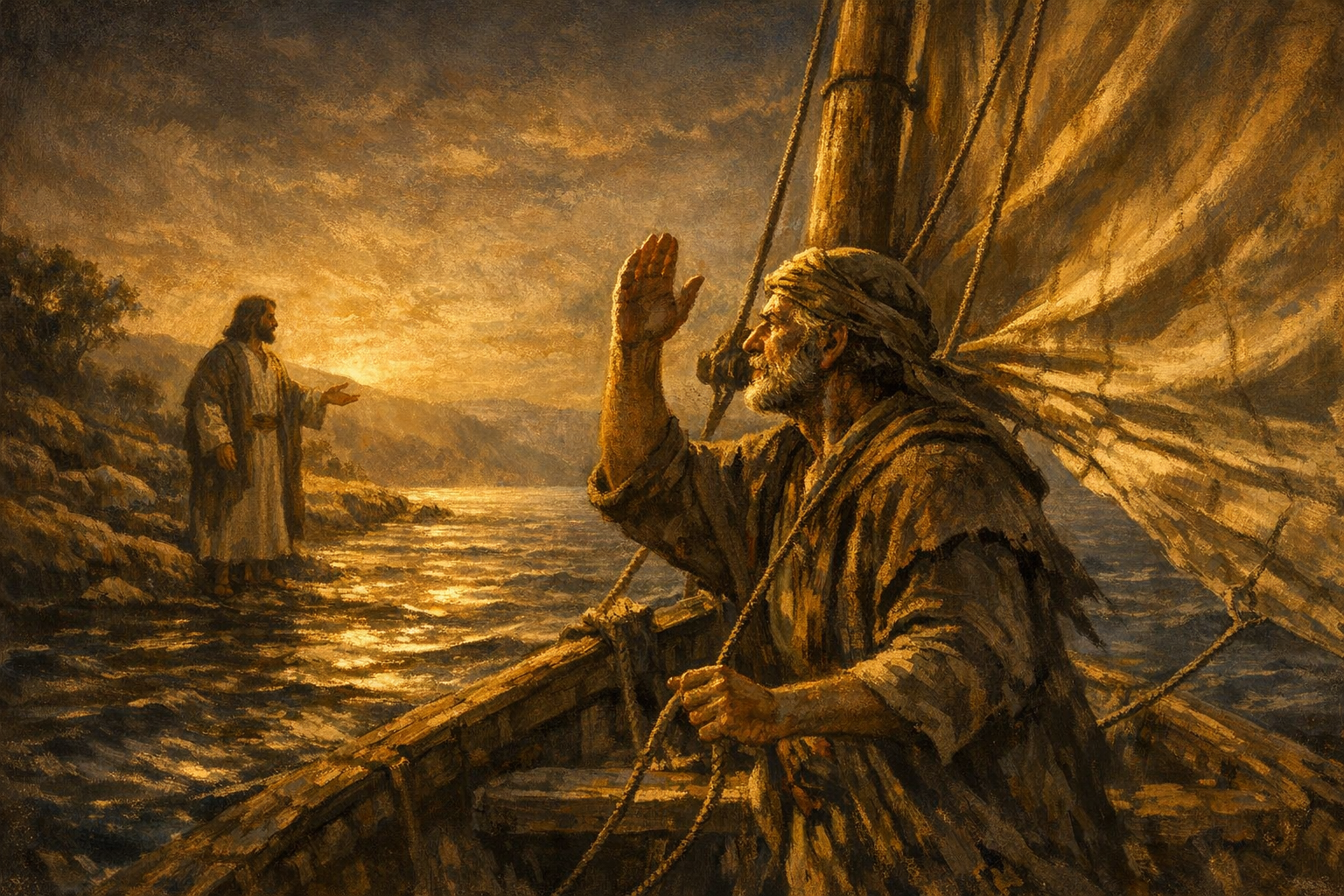
Joining God's Wind: Watching and Acting
Part of the Series: Awakening Spiritual Interest — Reaching Hearts for God
Introduction
There is a wind blowing across the world that no human hand can direct and no human eye can fully trace. It is the Spirit of God, moving among hearts, stirring up need, planting desire, and drawing souls toward the Saviour. Our calling is not to manufacture that movement — it is to watch for it, join it, and become willing instruments in the hands of the One who is already at work. This lesson explores how we can partner with God by watching what He is doing and acting in step with His Spirit.
The Wind You Cannot See
Jesus used the image of wind to describe the mysterious, sovereign work of the Holy Spirit. We do not command the wind; we observe its effects and move with it.
"The wind bloweth where it listeth, and thou hearest the sound thereof, but canst not tell whence it cometh, and whither it goeth: so is every one that is born of the Spirit." — John 3:8 (KJV)
Just as a sailor reads the wind by watching the movement of the sails and the surface of the sea, the disciple reads the Spirit's movement by watching the lives of the people around them. Has a neighbour just lost a job? Has a friend received a frightening diagnosis? Has a colleague just achieved everything they dreamed of and found it hollow? These are the effects of the Wind — moments in which God has already been at work, creating a readiness of heart that we are invited to meet with truth and love.
The source material for this lesson identifies five stages through which people move toward God: feeling their need, desiring a change, gaining information from the Bible, experiencing conviction, and finally surrendering their will to God's will. Our role as partners with God is to discern where a person stands in that journey and to offer what is needed at that moment — not to rush the process, but to serve it.
God Sees the Heart — and So Must We
A foundational key to reaching people is learning to look past the outward surface and see the inward reality. The prophet Samuel nearly anointed the wrong man as king because he was looking at height and appearance. God corrected him with a principle that must govern all our outreach:
"But the LORD said unto Samuel, Look not on his countenance, or on the height of his stature; because I have refused him: for the LORD seeth not as man seeth; for man looketh on the outward appearance, but the LORD looketh on the heart." — 1 Samuel 16:7 (KJV)
On the outside, people look very different — different backgrounds, cultures, temperaments, and lifestyles. But on the inside, the human heart without God carries a remarkably consistent burden: fear, guilt, shame, pain, confusion, loneliness, emptiness, and hopelessness. When we train our eyes to see the heart rather than the surface, we begin to see what God sees — and we begin to feel what He feels toward the lost.
What Awakens Spiritual Need and Desire?
The source material identifies four experiences through which God awakens spiritual hunger in people. The first two are primarily God's work; the last two are where we become His partners.
1. Losing Something Precious
When people lose health, a relationship, a dream, or a loved one, they instinctively ask, "Why? Where is God?" Grief and loss crack open the shell of self-sufficiency. This is God's sovereign work — allowing crisis to create need. Our role is not to cause such crises, but to be present when they occur.
2. Getting What They Wanted — and Finding It Empty
Success, wealth, and achievement can be just as spiritually awakening as loss. The person who finally gets the promotion, the house, or the relationship and asks, "Is this all there is?" is standing at a threshold. God has been at work. The Wind is blowing.
3. Witnessing a Personal Testimony
When people see the life of a genuine follower of Jesus — someone marked by peace instead of fear, forgiveness instead of guilt, purpose instead of emptiness — they are drawn. The result is often, "I want what that person has." This is our part. We are called to be living demonstrations of what Jesus does in a surrendered life.
The apostle Paul understood that the believer's life is itself a form of proclamation:
"Ye are our epistle written in our hearts, known and read of all men: Forasmuch as ye are manifestly declared to be the epistle of Christ ministered by us, written not with ink, but with the Spirit of the living God; not in tables of stone, but in fleshy tables of the heart." — 2 Corinthians 3:2–3 (KJV)
People who may never open a Bible will read the open book of your life. They will see whether Jesus is real to you. They will notice whether your peace is genuine, whether your forgiveness is authentic, whether your hope is grounded. The testimony of a transformed life is one of the most powerful tools God has placed in our hands.
4. Hearing the Truth of God's Word
The fourth awakening experience is the direct encounter with Scripture. The Word of God carries its own authority and its own power to convict. The writer of Hebrews declares:
"For the word of God is quick, and powerful, and sharper than any twoedged sword, piercing even to the dividing asunder of soul and spirit, and of the joints and marrow, and is a discerner of the thoughts and intents of the heart." — Hebrews 4:12 (KJV)
This is why sharing even a single verse — on a card, in a conversation, through a Bible study guide — can be the moment that changes everything. The Word does not return void. Isaiah records God's own promise:
"So shall my word be that goeth forth out of my mouth: it shall not return unto me void, but it shall accomplish that which I please, and it shall prosper in the thing whereto I sent it." — Isaiah 55:11 (KJV)
Practical approaches to sharing the Word include handing a friend a single verse written on a card, sharing a favourite passage and explaining why it matters to you, or offering a Bible study guide on a topic that connects with a person's questions. Each of these is a seed sown in the field where the Wind is already blowing.
The Three Groups and How to Reach Them
Not everyone we encounter is in the same place spiritually. The source material describes three groups: the searching, the indifferent, and the hostile. Understanding why people react differently helps us respond with wisdom rather than frustration.
Think of people as magnets. Some are attracting — they are searching and open. Some are inactive — they are indifferent, unaware of their need. Some are repelling — they are hostile, pushing back against spiritual things. Each state has a cause, and each requires a different approach rooted in the same two ingredients: truth and love.
- Love without Truth = Indifference. When we only affirm people and never bring them face to face with God's Word, we leave them comfortable in their lostness. The indifferent person needs a wake-up call — a crisis, a prophecy, a plain "Thus saith the Lord" that arrests their attention.
- Truth without Love = Hostility. When we confront people with truth but without genuine relationship and care, we put them on the defensive. The hostile person does not need more argument — they need a friend. They need to experience the love of Jesus through you before they will be willing to hear the claims of His Word.
- Truth + Love = Attraction. This is the formula of Jesus Himself. Paul captures it succinctly: "But speaking the truth in love" (Ephesians 4:15, KJV). And Jesus promises the result of this approach: "And I, if I be lifted up from the earth, will draw all men unto me" (John 12:32, KJV).
"But speaking the truth in love, may grow up into him in all things, which is the head, even Christ." — Ephesians 4:15 (KJV)
"And I, if I be lifted up from the earth, will draw all men unto me." — John 12:32 (KJV)
The Pattern of Genesis 3: Two Questions in Sequence
When God came to Adam and Eve after their fall in the Garden, He did not open with accusation. He opened with a question of relationship: "Where art thou?" (Genesis 3:9, KJV). Only after establishing that relational connection did He ask the question of behaviour: "What is this that thou hast done?" (Genesis 3:13, KJV). This sequence — relationship first, then truth — is the divine pattern for reaching the lost.
"And the LORD God called unto Adam, and said unto him, Where art thou?" — Genesis 3:9 (KJV)
"And the LORD God said unto the woman, What is this that thou hast done? And the woman said, The serpent beguiled me, and I did eat." — Genesis 3:13 (KJV)
Notice what happened when God spoke to Adam and Eve in their lostness: they felt shame and guilt, they ran and hid, they tried to fix the problem themselves, and they blamed each other. This is precisely how many people respond when confronted with spiritual truth. They are not simply being stubborn — they are going through a process. God was patient with Adam and Eve, and He calls us to be patient with those we are trying to reach. The goal is not to win an argument; it is to win a heart. Win the heart, and the mind will follow.
The same pattern appears when we consider how Israel rejected God's leadership in 1 Samuel. Even when the people chose a human king over God's direct rule, God said to Samuel:
"And the LORD said unto Samuel, Hearken unto the voice of the people in all that they say unto thee: for they have not rejected thee, but they have rejected me, that I should not reign over them." — 1 Samuel 8:7 (KJV)
When people do not respond well to our witness, it is not ultimately a rejection of us — it is part of a longer conversation they are having with God. We are not responsible for the harvest; we are responsible for faithful sowing.
Practical Application: Three Ways to Join the Wind This Week
Watching for God's movement is not passive. It requires intentional presence in the lives of the people around us. Here are three practical steps you can take this week to join what God is already doing:
- Investigate, Stimulate, Relate. When you encounter someone going through a crisis — loss, transition, or emptiness — resist the urge to immediately offer answers. First, ask questions and listen. Then gently stimulate reflection: "Have you ever thought about what gives life real meaning?" Then, when trust is established, ask: "May I share something that has helped me?" Relationship opens the door that argument cannot unlock.
- Share a Verse. Write a meaningful Bible verse on a card or in a text message and share it with one person today. Say simply, "I read this and thought of you." Let the Word do its own work. You are planting a seed in soil where the Wind is already blowing.
- Let Jesus Show Through You. Identify one area of your life where the peace, forgiveness, or purpose of Jesus is visible to those around you. Ask God to make that testimony clear to someone this week — not through words alone, but through the quiet, steady witness of a transformed life. You may be the only Bible someone reads today.
Reflection Questions
- John 3:8 compares the Holy Spirit to the wind. In your own life, where have you seen the "effects" of the Spirit moving in someone before you spoke a single word to them about God? What did that teach you about your role as a witness?
- The source material identifies four experiences that awaken spiritual need and desire. Which of these four has been most significant in your own journey toward God? How does remembering your own awakening change the way you approach others?
- Consider the equations: Love – Truth = Indifference; Truth – Love = Hostility; Truth + Love = Attraction. Think of a relationship in your life right now. Which equation best describes your current approach? What adjustment might God be calling you to make?
- God's two questions in Genesis 3 — "Where art thou?" and "What is this that thou hast done?" — follow a deliberate sequence: relationship before confrontation. How does this pattern challenge the way you typically engage with people who are spiritually indifferent or hostile?
- Hebrews 4:12 describes the Word of God as living and powerful. What is one practical, low-pressure way you could place the Word of God in someone's hands or heart this week — someone who may not yet be open to a formal Bible study?